
Kabuli Pulao is one of the best rice dishes I've ever cooked. I've always loved Afghan food and honestly, I'd pick Kabuli Pulao over biryani, I mean if I have to choose one. Because it's not overly spicy. It's warm, balanced, and comforting.
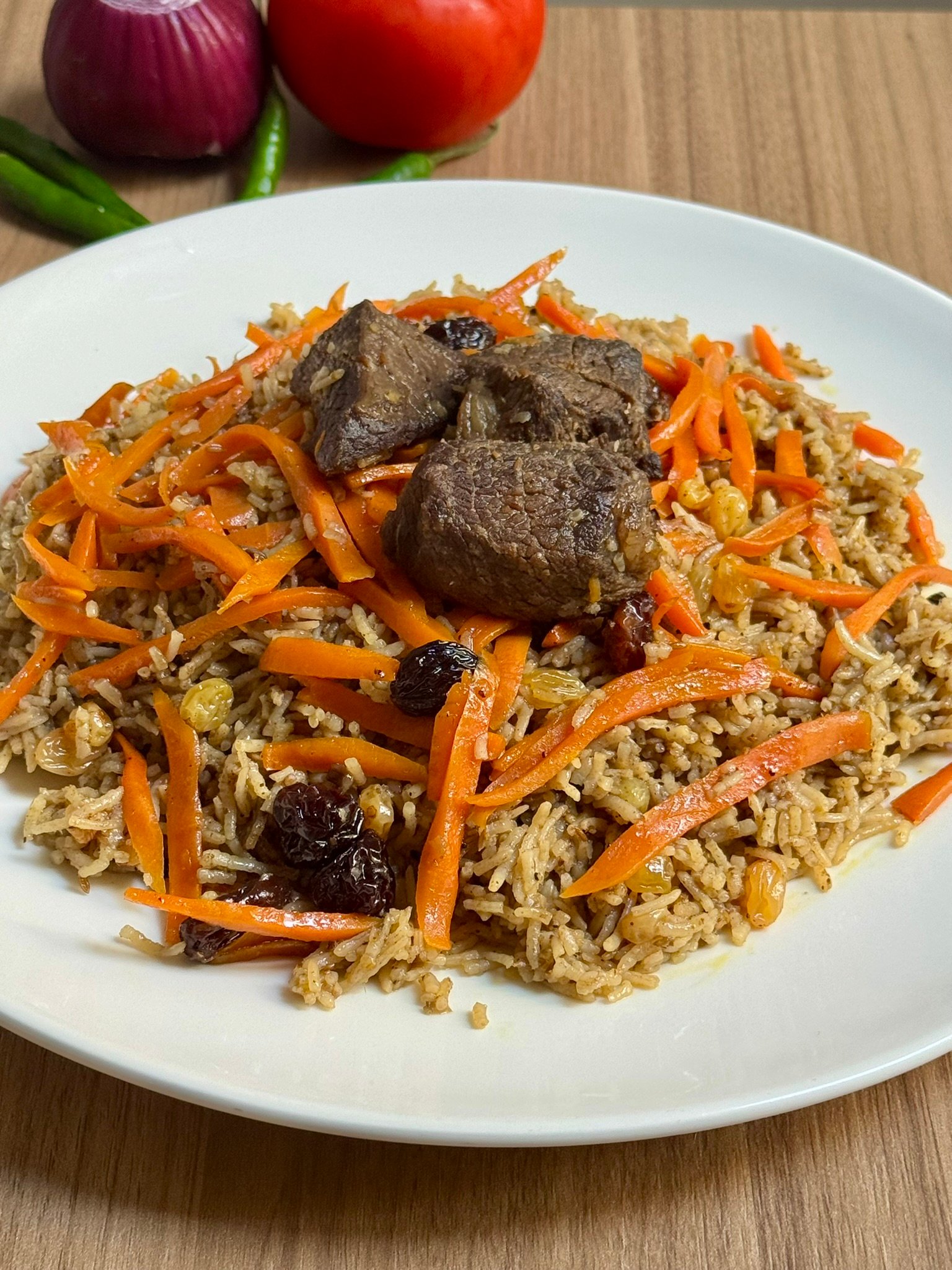
Once you try it, you'll understand why it's the national dish of Afghanistan.
What is Kabuli Pulao?
Kabuli Pulao (or Qabili Palau, whatever you call it) is the same rice dish made with tender meat, caramelized julienned carrots, and sweet raisins, all cooked in a rich meat broth.
You'll find Kabuli Pulao in restaurants across Pakistan, from Peshawar to Karachi, largely because of the deep Afghan influence through Khyber Pakhtunkhwa (KPK), the northwestern province with a large Pashtun population. We have a lot of Pathan brothers in Pakistan, and Afghan food has become deeply woven into Pakistani food culture.
Ingredient Notes
This section is about what to look for at the store and why each choice matters. All measurements live in the recipe card at the bottom.
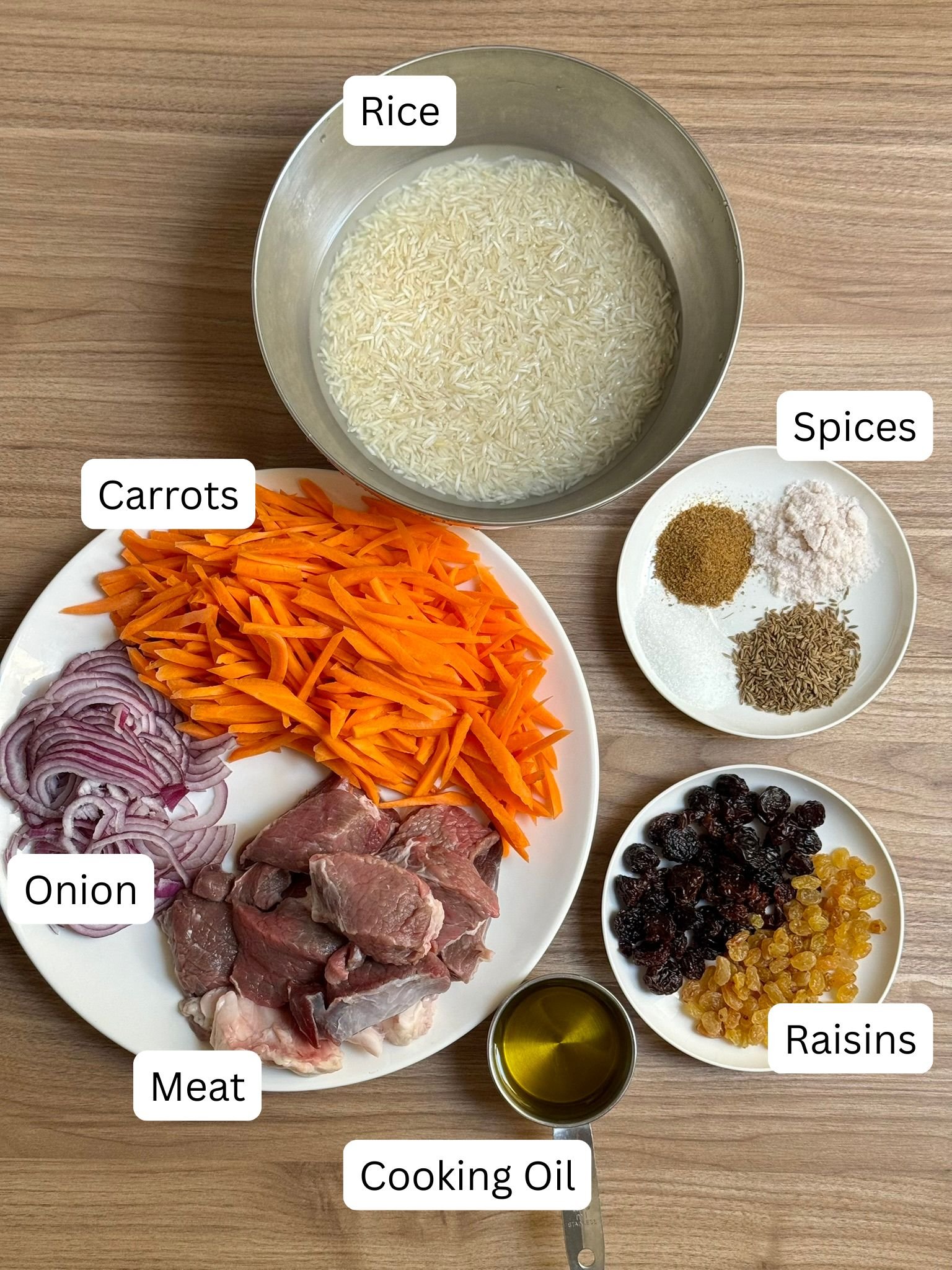
- Boneless beef vs. bone-in lamb. Traditional Kabuli Pulao uses bone-in lamb (or mutton) with large meaty pieces — that's actually the more authentic choice. In Pakistan though, beef is what most home cooks reach for, and I prefer the taste of beef in pulao over lamb. Either works. If you go bone-in, you'll get an even richer broth thanks to the marrow, and you'll need to cook the meat longer.
- Basmati rice — regular vs. Sella. Long-grain basmati is NON-NEGOTIABLE. If you can find Sella (parboiled) basmati, use it — the grains hold their shape through the Dum step and never turn mushy. Regular aged basmati works too, as long as you soak it for at least 30 minutes so it cooks evenly and stays separate.
- Carrots — julienne matters. Thin matchstick strips are what you want. Thick carrot pieces won't caramelize the same way, and they'll still be crunchy while the rest of the dish is done. A mandoline or the julienne attachment on a box grater takes the pain out of this.
- Golden and black raisins. Both, if you can. Golden raisins are sweeter and brighter; black raisins are deeper and slightly winey. Together they give the dish more dimension than either alone. If your black raisins are much larger than your goldens, halve them so they plump at the same rate. Golden-only is a fine backup.
- Whole cumin seeds and cumin powder — they're NOT interchangeable. Whole seeds go into the broth at the start and infuse it slowly as the meat cooks. Ground cumin gets sprinkled over the rice right before Dum, so its aroma hits you when you lift the lid. If you can, dry-roast whole seeds and crush them fresh for the powder — the difference is REAL.
- White sugar. Just a spoonful, and only for the carrots. It nudges them from softened to glossy and caramelized, and adds a whisper of sweetness that ties the whole dish together.
- Salt. Season the broth well at the pressure-cooking stage. Once the rice goes in, you can't easily fix an underseasoned base.
The Methods That Make or Break It
This section tells you why, and where things go wrong. Read this once before you cook and the whole dish clicks.
Dry-fry the meat before adding water
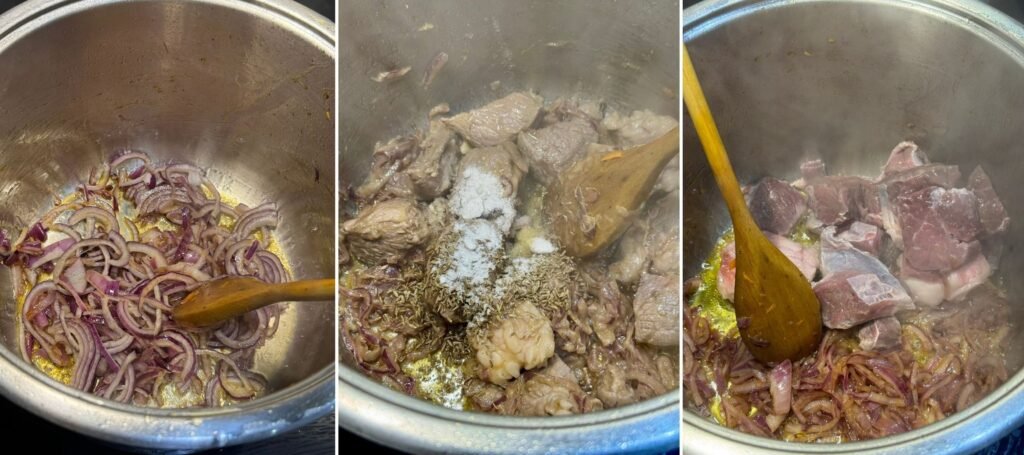
After the onions are golden and the beef goes in, you fry the meat until ALL the moisture evaporates — you'll see the liquid bubble off and the meat start browning against the pan. Only then do you add water for the pressure cook.
Skipping this step gives you a thin, watery broth. Doing it gives you a concentrated, deeply savory Yakhni that flavors the entire rice. This is the single biggest difference between a good pulao and a great one.
Caramelize the carrots - don’t cook them
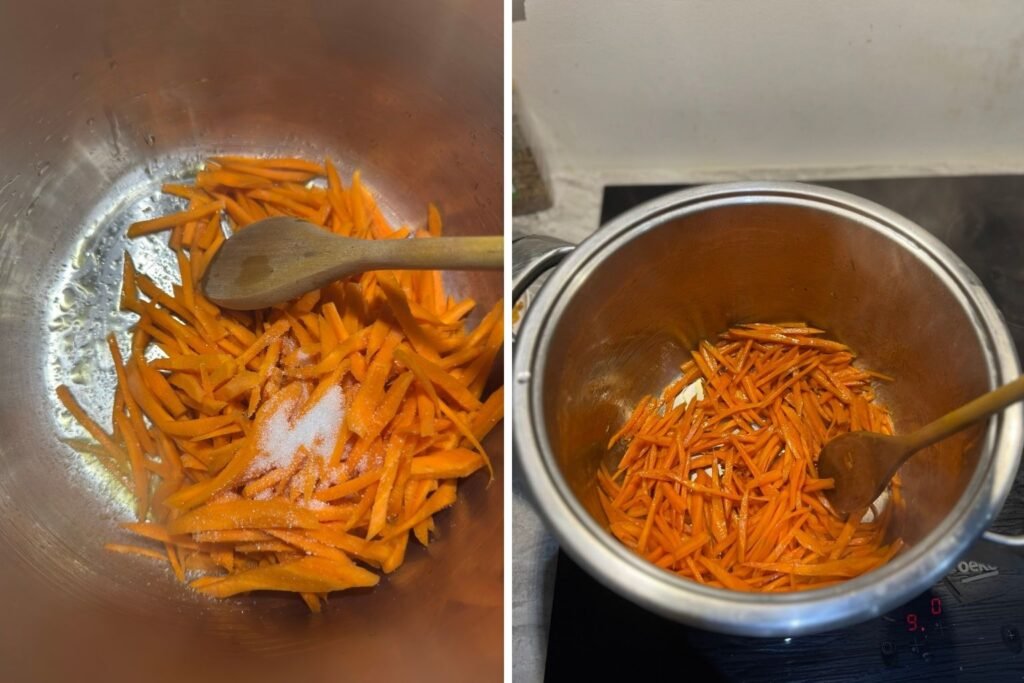
The carrots are a topping, NOT a stew ingredient. You want them glossy, sweet, and still slightly crisp, not soft. Medium-high heat, a spoonful of sugar, and a short toss in the pan is all it takes. If they go floppy, you've taken them too far. Pull them the moment they turn shiny.
The raisin window
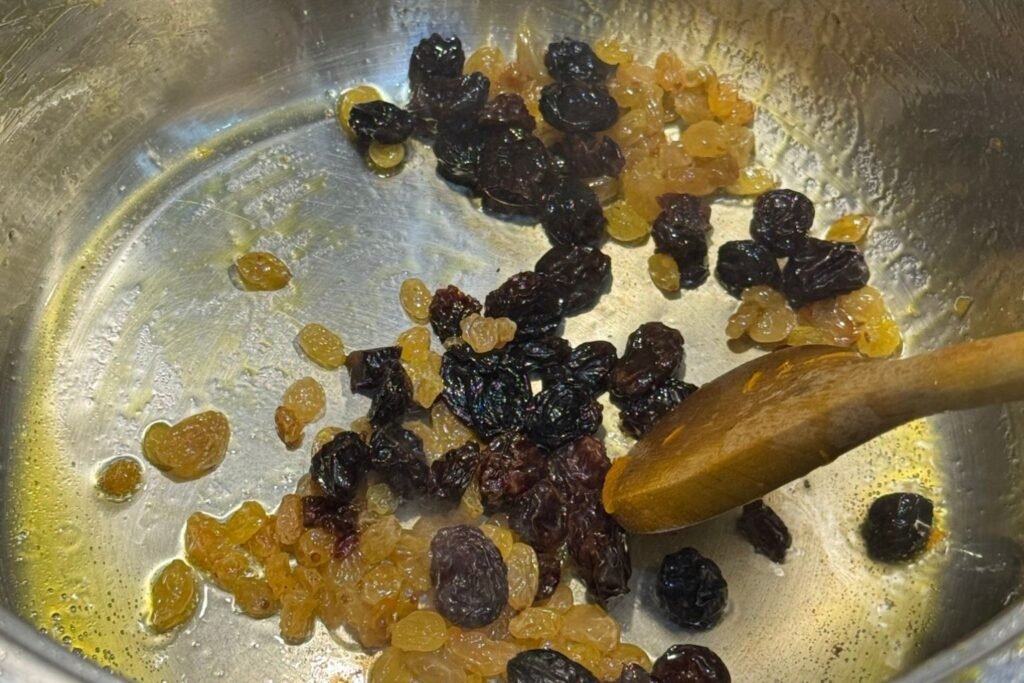
Raisins are the fastest thing in this recipe to ruin. They go from dry to plump and glossy in under two minutes, and from plump to bitter and burnt in seconds after that. Stand at the pan. DO NOT walk away. When they swell and shine, they're done.
Read the rice - wait for the holes
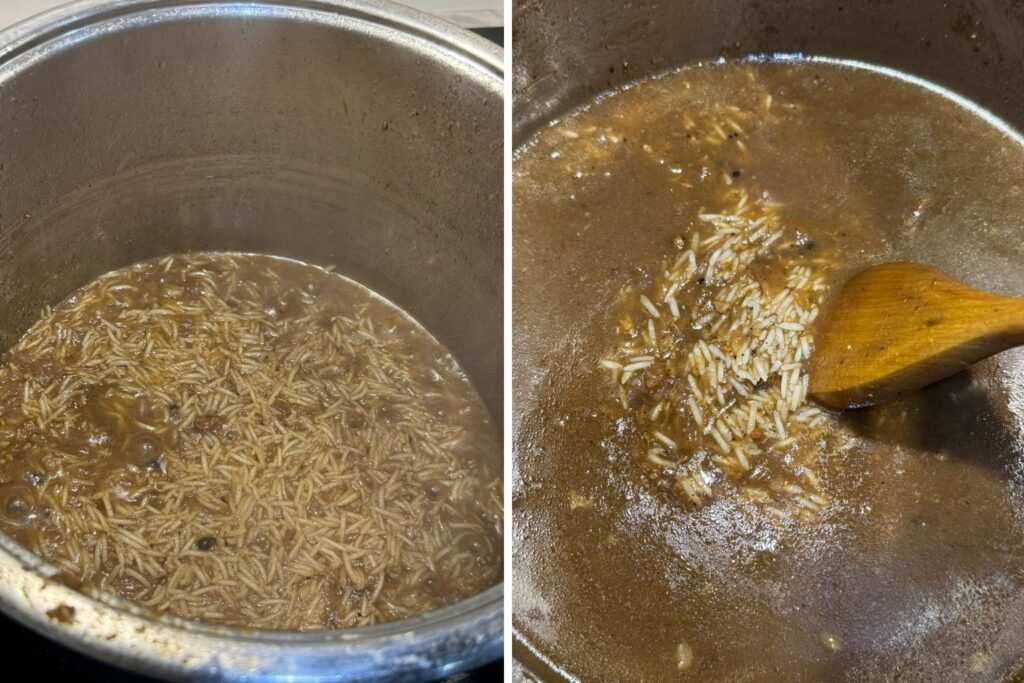
When you cook the rice in the broth uncovered, you're waiting for a very specific visual cue. Small holes forming on the surface, like little steam vents. That means most of the liquid has been absorbed and the rice is mostly cooked through. This is the EXACT moment to layer the toppings and start the Dum. Too early and you get soupy pulao. Too late and the bottom scorches before the top is done.
Also, taste the broth before the rice goes in. Once the rice is absorbing the liquid, salt corrections become guesswork.
Seal the lid for Dum
Dum (the final low-heat steam) is where the flavors marry and the rice finishes. It ONLY works if the steam stays inside. If your pot lid doesn't have a tight seal, wrap a clean kitchen towel around the rim, or lay a sheet of foil under the lid before you close it.
A leaky Dum gives you unevenly cooked rice and dry top layers. A well-sealed Dum gives you the fluffy, aromatic pulao you were aiming for. And DO NOT lift the lid to peek. Trust the timer.
Tips
- ALWAYS soak your rice for at least 30 minutes if you want long, separate grains.
- Chop oversized black raisins so they cook evenly with the goldens.
- Grind your own cumin. Dry-roast whole seeds until fragrant, then crush. It's much stronger than pre-ground.
- DO NOT skip the seal on Dum. Foil or a towel, whatever it takes.
What to Serve with Kabuli Pulao
Kabuli Pulao is a complete meal. What it really needs alongside is contrast. Something fresh and sharp to cut the richness.
A simple Afghan-style salad of sliced onion, tomato, cucumber, and a squeeze of lemon is the classic pairing. The acid and crunch balance the sweet-savory rice perfectly.
A bowl of raita (plain yogurt with salt, cumin, and grated cucumber) works just as well, especially if you like a cooling element with your meal.
Try These Recipes Next:
Kabuli Pulao (Afghani Rice) Recipe
Ingredients
- 1 kg boneless beef cut into bite-sized pieces
- 2.5 cups basmati rice soaked in water for 30 minutes
- 3 cups carrots julienned into thin matchstick strips
- 1 large onion thinly sliced
- ¾ cup cooking oil ½ cup for the meat, ¼ cup for carrots and raisins
- ⅓ cup golden raisins
- ⅓ cup black raisins chop if large
- 1 tbsp whole cumin seeds
- 1 tbsp cumin powder freshly ground preferred
- 1 tbsp white sugar
- 1 tbsp salt or to taste
- 6 to 7 cups water

Instructions
- Pressure cook the beef: Heat ½ cup oil in a pressure cooker over medium heat. Sauté the sliced onion until golden brown. Add the beef, whole cumin seeds, and 1 tbsp salt. Fry for about 10 minutes until the moisture from the meat dries up completely. Pour in 6–7 cups of water, seal the lid, and pressure cook for about 20 minutes until the meat is fork-tender.
- Fry the carrots: In a separate pan, heat 2 tbsp oil over medium-high heat. Add the julienned carrots and 1 tbsp sugar. Sauté for about 5 minutes until glossy and tender-crisp. Remove and set aside.
- Fry the raisins: In the same pan, add the remaining oil. Fry the golden and black raisins over medium heat for about 2 minutes until they plump up and turn glossy. Watch them closely — they burn FAST. Remove and set aside with the carrots.
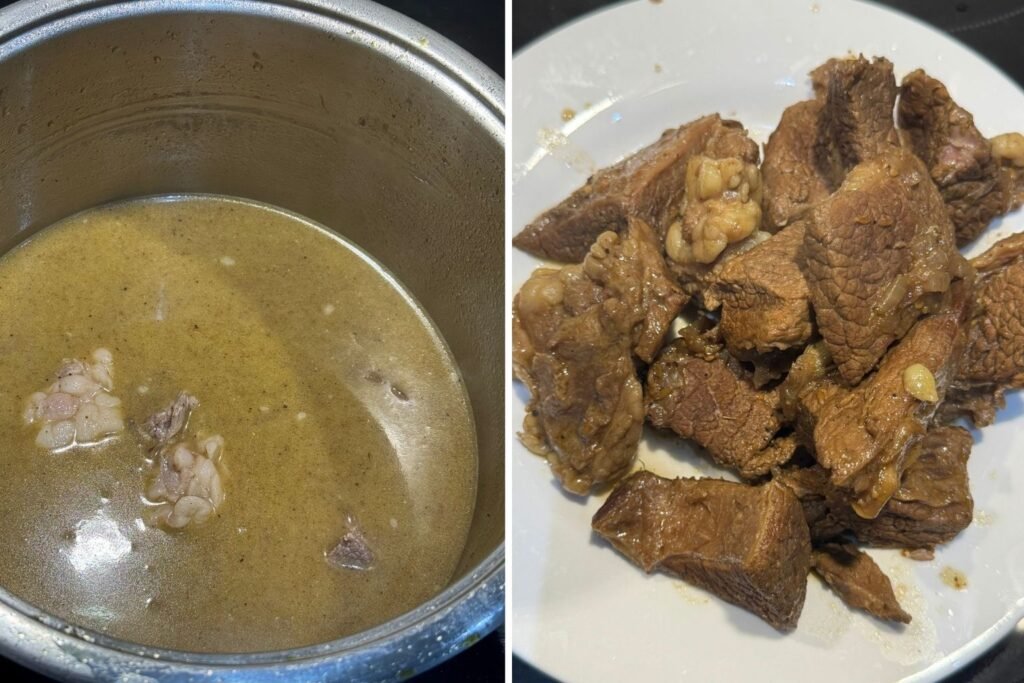
- Separate the meat from the broth: Open the pressure cooker and lift out the tender meat. Keep the broth (Yakhni) in the pot.
- Cook the rice in the broth: Drain the soaked rice and add it to the hot broth. If the liquid doesn't sit about an inch above the rice, top up with warm water. Taste the broth and adjust salt NOW. Cook uncovered on medium-high heat until most of the water evaporates and small holes form on the surface of the rice.
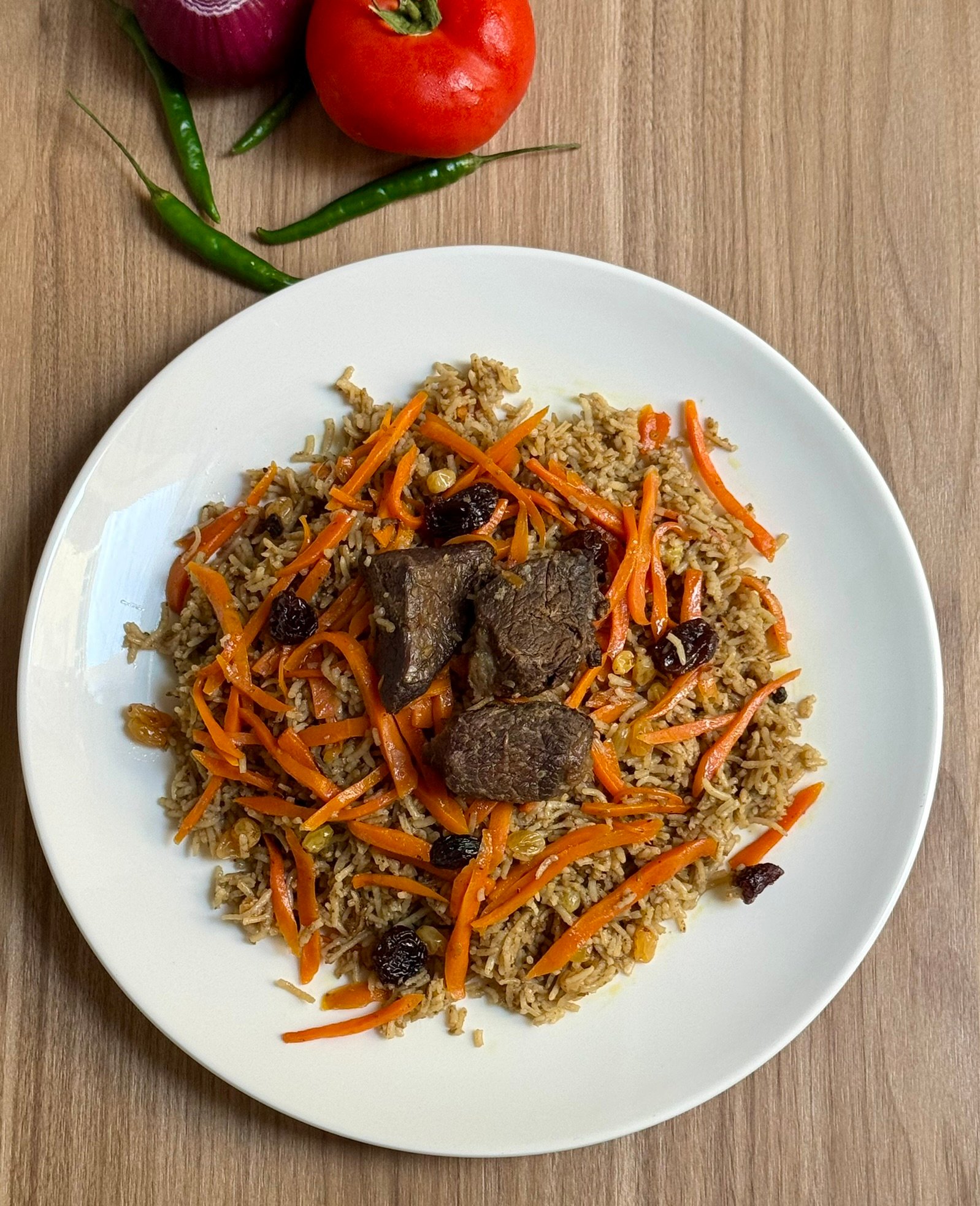
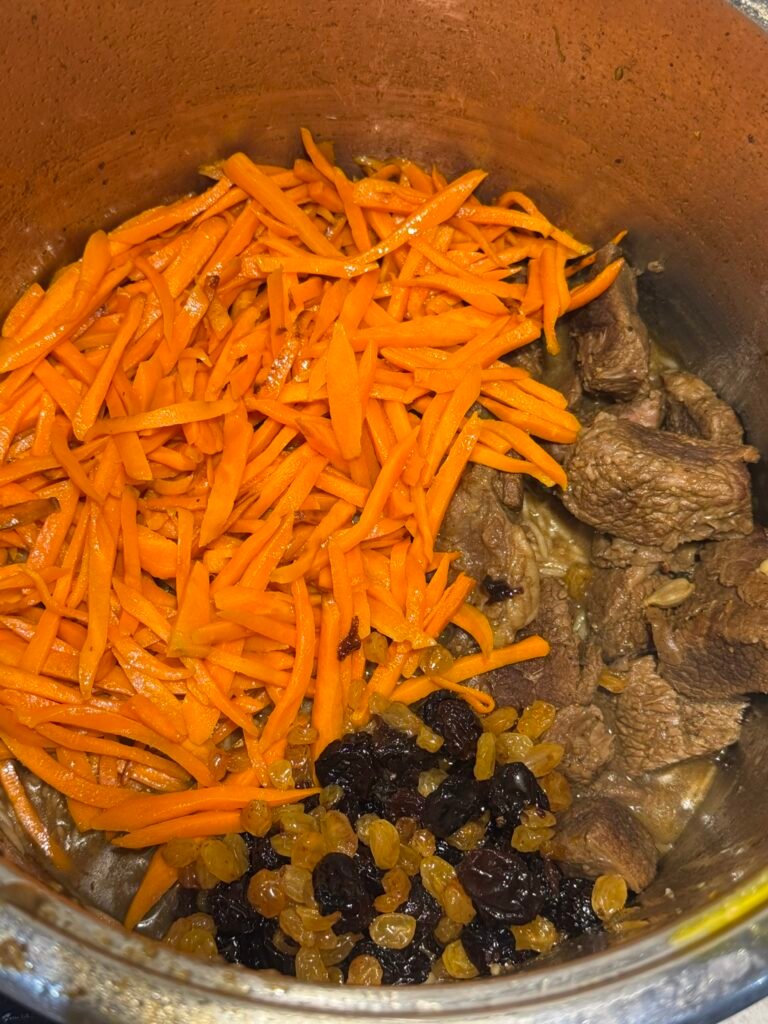
- Layer, sprinkle cumin, and steam (Dum): Sprinkle 1 tbsp cumin powder evenly over the rice WITHOUT stirring. Arrange the cooked beef, fried carrots, and fried raisins on top. Cover the pot tightly — use foil or a kitchen towel to seal if the lid is loose. Steam on the lowest heat for 10 minutes. DO NOT open the lid.
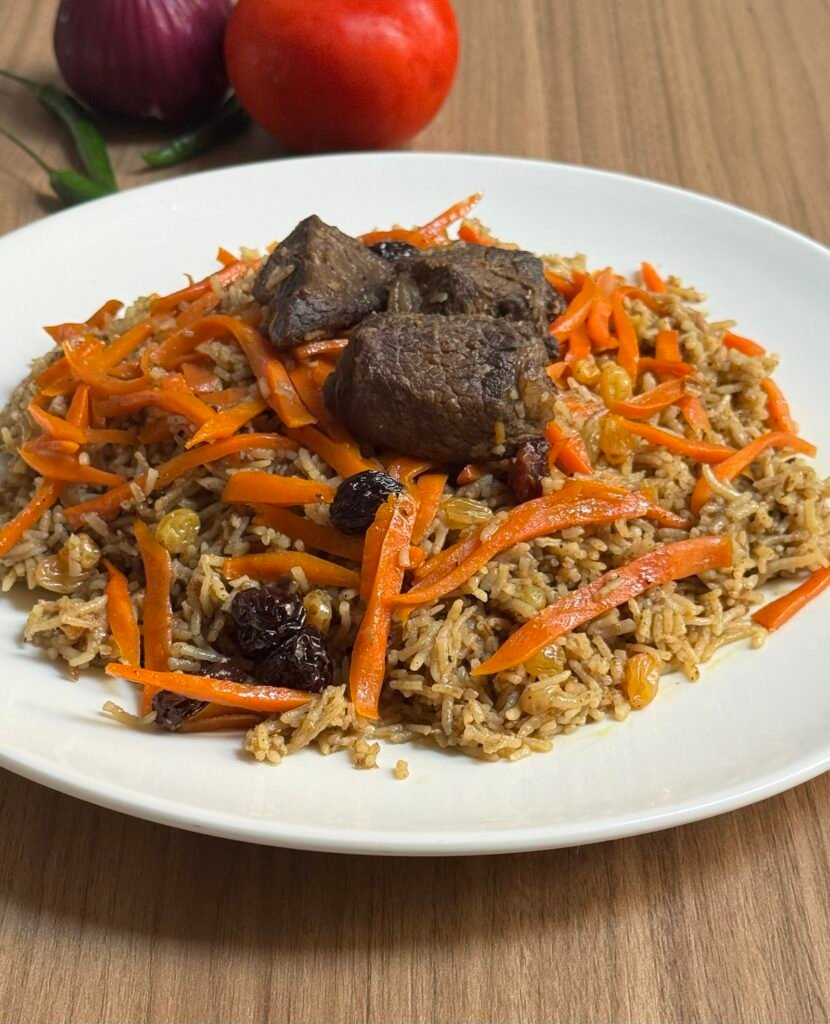
- Fluff and serve: Gently fluff the rice with a fork, being careful not to break the grains. Turn out onto a large platter with the carrots, raisins, and beef arranged on top.
Notes
- ALWAYS soak rice at least 30 minutes for fluffy, separate grains.
- For bone-in lamb or mutton, increase pressure cooking time to 30–40 minutes.
- For chicken, reduce pressure cooking time to 8–10 minutes.
- Seal the lid tightly for Dum. Use a kitchen towel or foil if the lid is loose.
- ALWAYS follow your pressure cooker's manual for safe operation.
Frequently Asked Questions
Which type of rice is best for Kabuli Pulao?
Long-grain Sella basmati is ideal because it holds its shape during Dum and stays fluffy. Regular aged basmati also works well if you soak it for at least 30 minutes. I used regular basmati in this recipe.
Can I use lamb, mutton, or chicken instead of beef?
Yes — and lamb or mutton (bone-in) is actually the more traditional choice. For bone-in lamb or mutton, increase the pressure cooking time to 30–40 minutes. For chicken, drop it to 8–10 minutes so it doesn't overcook.
What if the broth isn't enough for the rice?
Top up with warm water. The general rule is that the liquid should sit about an inch above the rice level when you add it to the pot.
Can I make this without a pressure cooker?
Yes, but plan on 1.5–2 hours for the meat to become fork-tender in a regular pot, and check the water level occasionally so it doesn't dry out.



0 Comments