
There's the Chicken Karahi you get at most Indian restaurants (usually creamier, often with cashews or bell peppers, and honestly not really karahi at all). And then there's the real, restaurant-style Pakistani Chicken Karahi that I grew up on. This is that version.
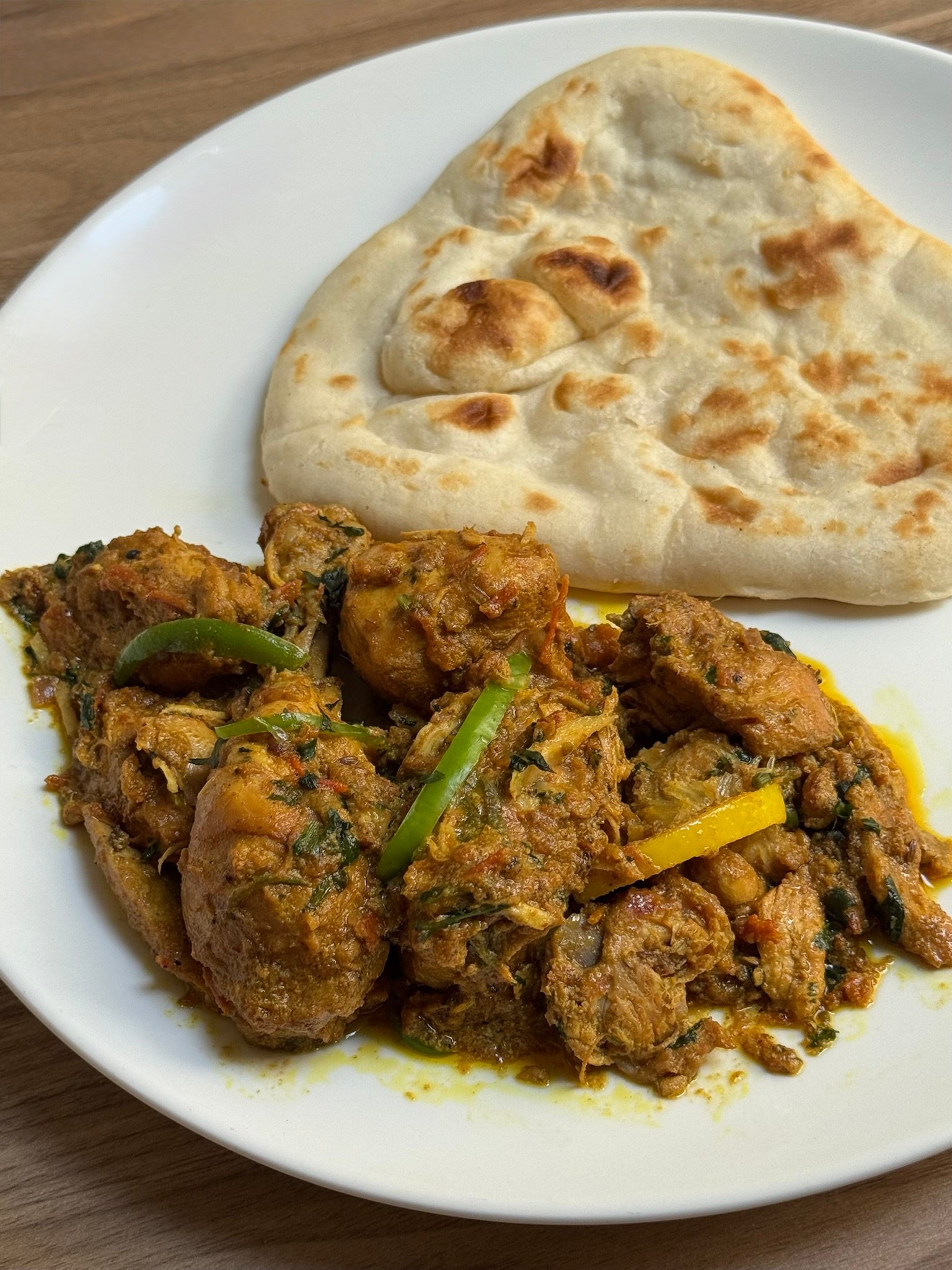
It's easily in my top 3 Pakistani dishes, and leftovers never make it to the next day at our place.
Why This Recipe?
- Butter AND ghee for restaurant-level richness. Most home recipes use one or the other. I use both, and the depth of flavor you get is worth it.
- Traditional Pakistani technique. No cream, no cashews, no shortcuts on the bhunai (sear). Just a small onion for extra masala depth (my personal preference, more on that below).
- Yogurt goes in mid-cook, not at the end. It gets cooked right into the masala with a knob of butter, which gives you a creamier, more integrated finish.
- A tomato-skin trick that actually works (my mom's, and I use it every single time).
- Includes a dairy-free swap so nothing has to sit on the sidelines.
Tested, retested, and Hassaan-approved.
What is Chicken Karahi?
Karahi (called kadai in India) is named after the pan it's cooked in. It's a heavy, wok-shaped pan with a flatter base, traditionally cast iron. Back home, karahi was cooked over an open fire, with the meat seared, simmered, and reduced right in the same pan (which is how you get that beautifully glossy, oil-separated masala at the end).
The dish comes from the Khyber Pakhtunkhwa region of Pakistan (formerly the North-West Frontier), which is why it leans heavy on meat, ripe tomatoes, and freshly ground black pepper. No sugar, no cream, no fussiness. You'll find some version of Chicken Karahi at almost every roadside dhaba (Pakistani roadside restaurant) and family dinner table in Pakistan.
What makes Chicken Karahi distinct is its rich, tomato-forward masala and the fragrant finish of green chilies, cilantro, and slivers of fresh ginger. Compared to my Chicken Salan, karahi is more bhuna (sautéed and reduced), so it comes out drier and more concentrated.
Pakistani vs. Indian Chicken Karahi
Here's where I have to be honest with you. Most of the "chicken karahi" served in America (and in a lot of places I've traveled) is the Indian version. It's heavier on onion, sometimes includes cream, cashews, or bell peppers, and is usually called kadai chicken on the menu. Pakistani Chicken Karahi is much simpler. Traditionally no onion, no dairy in the base, and the tomatoes and black pepper do the heavy lifting. Both are delicious in their own way. But if the only karahi you've ever had is at an Indian restaurant, this one is going to taste different. In the best way.
Does Chicken Karahi Have Onion?
Traditionally, no. In most Pakistani households, Chicken Karahi is made without any onion at all. That said, I add one small, finely chopped onion to mine because I love how it deepens the masala and gives you a bit more of the good stuff to scoop up with your naan. It's not strictly traditional, but after making this recipe both ways many times over, this is the version I've settled on. If you want to keep it fully traditional, feel free to skip the onion (the recipe still works beautifully).
Ingredient Notes
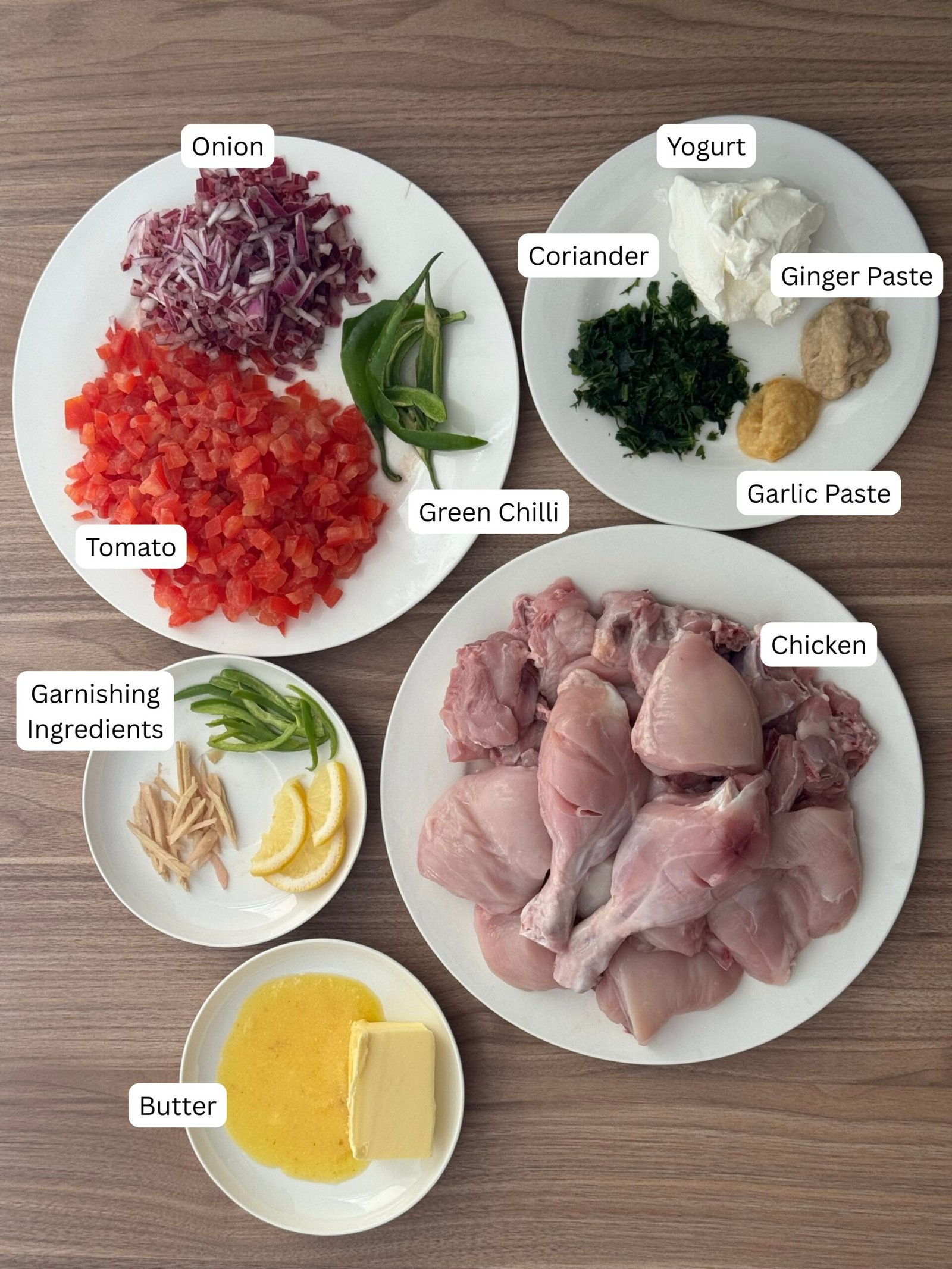
- Ghee AND butter. I know, unusual for karahi. Ghee gives you that nutty, traditional depth, and butter adds a rich, silky finish that makes the masala taste like it came out of a good Lahori restaurant kitchen. If you want to stay fully traditional, skip the butter and increase the ghee. But please try it my way at least ONCE.
- Tomatoes. Roma every time. They have denser flesh and less water content, so the masala reduces properly instead of turning into soup. Vine tomatoes are my backup. Whatever you use, make sure they're ripe and actually tasty (mealy off-season tomatoes will ruin your karahi, no way around it).
- Chicken (skinless, bone-in, small pieces). Bone-in gives you the FLAVOR. Skinless keeps the masala clean. Use small pieces (called karahi cut, which is a whole chicken chopped into about 18 pieces). If your chicken pieces are too big, the bhunai won't work properly and the flavor won't sink in. I ask my Halal butcher to do the karahi cut, and if yours doesn't know the term, just say "small pieces, cut through the bone."
- Garlic (heavy) and ginger (lighter). I use about 1½ tablespoons of garlic paste to 1 teaspoon of ginger paste. Most karahi recipes go equal, but I've always found garlic gives you a punchier, more savory base while ginger works better as a finishing garnish (which is where the julienned ginger comes in later). Trust me on the ratio, try it ONCE.
- Green chilies. Indian finger chilies or serranos. Three chilies, slit in half with the seeds removed, so you get the flavor without wrecking your tongue. Leave the seeds in if you like heat. Use one if you're serving kids.
- Full-fat plain Greek yogurt. I like Greek because it's thicker, which means it coats the chicken instead of watering down the masala. Bring it to room temperature before you add it, and always whisk it smooth first. (More on preventing curdling in the tips section below.)
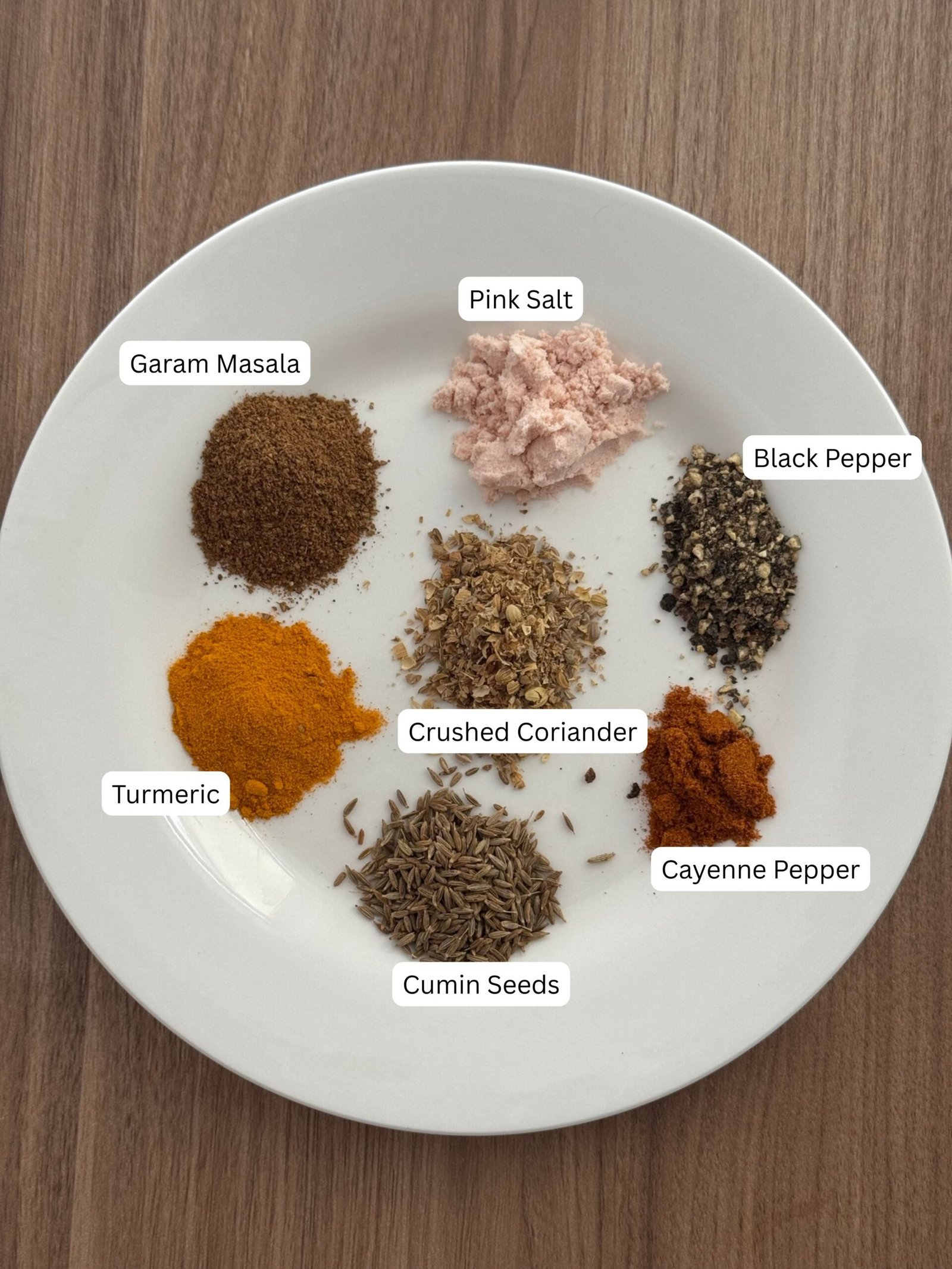
- Whole spices, freshly ground where possible. Coriander powder, cumin powder, red chili powder, garam masala, and (please) freshly ground black pepper. Karahi is a black pepper dish. Pre-ground pepper that's been sitting in your cabinet for two years is NOT going to cut it. Grind it right before you finish the curry if you can.
- One small onion. Traditional Pakistani karahi doesn't include onion, but I use one small, finely chopped onion in mine because I love the extra masala it produces (see "Does Chicken Karahi Have Onion?" above). You can skip it if you want to keep it fully traditional.
How to Make Chicken Karahi
Step 1: Build the Base
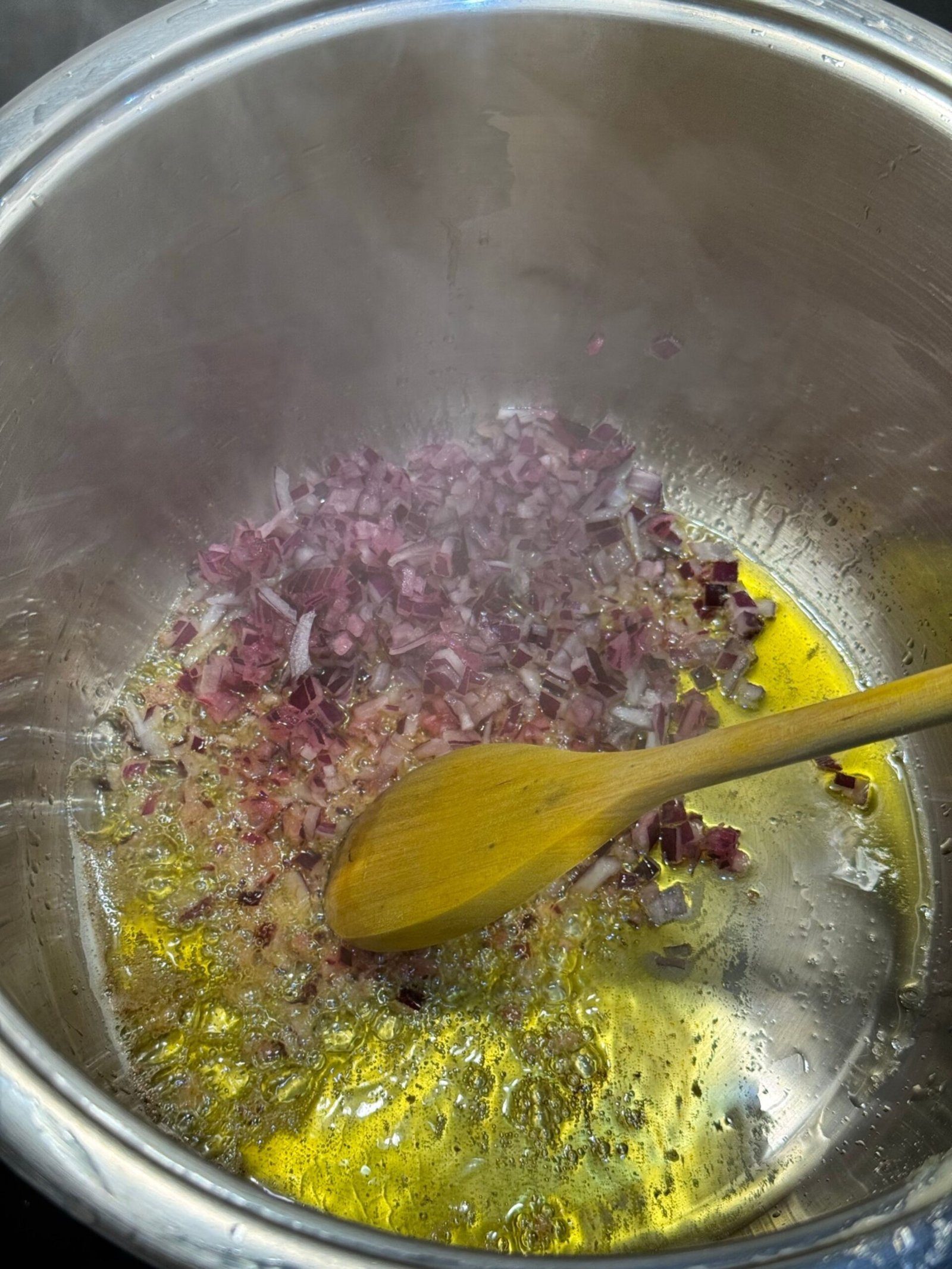
- Heat the ghee and cook the onion. In a heavy-bottomed pan or karahi, melt 4 tablespoons of ghee over medium-high heat. Add the finely chopped onion and sauté for about 3 minutes, until lightly golden. (Skipping the onion? Just get the ghee hot enough that a piece of chicken sizzles the moment it hits the pan, then move to the next step.)
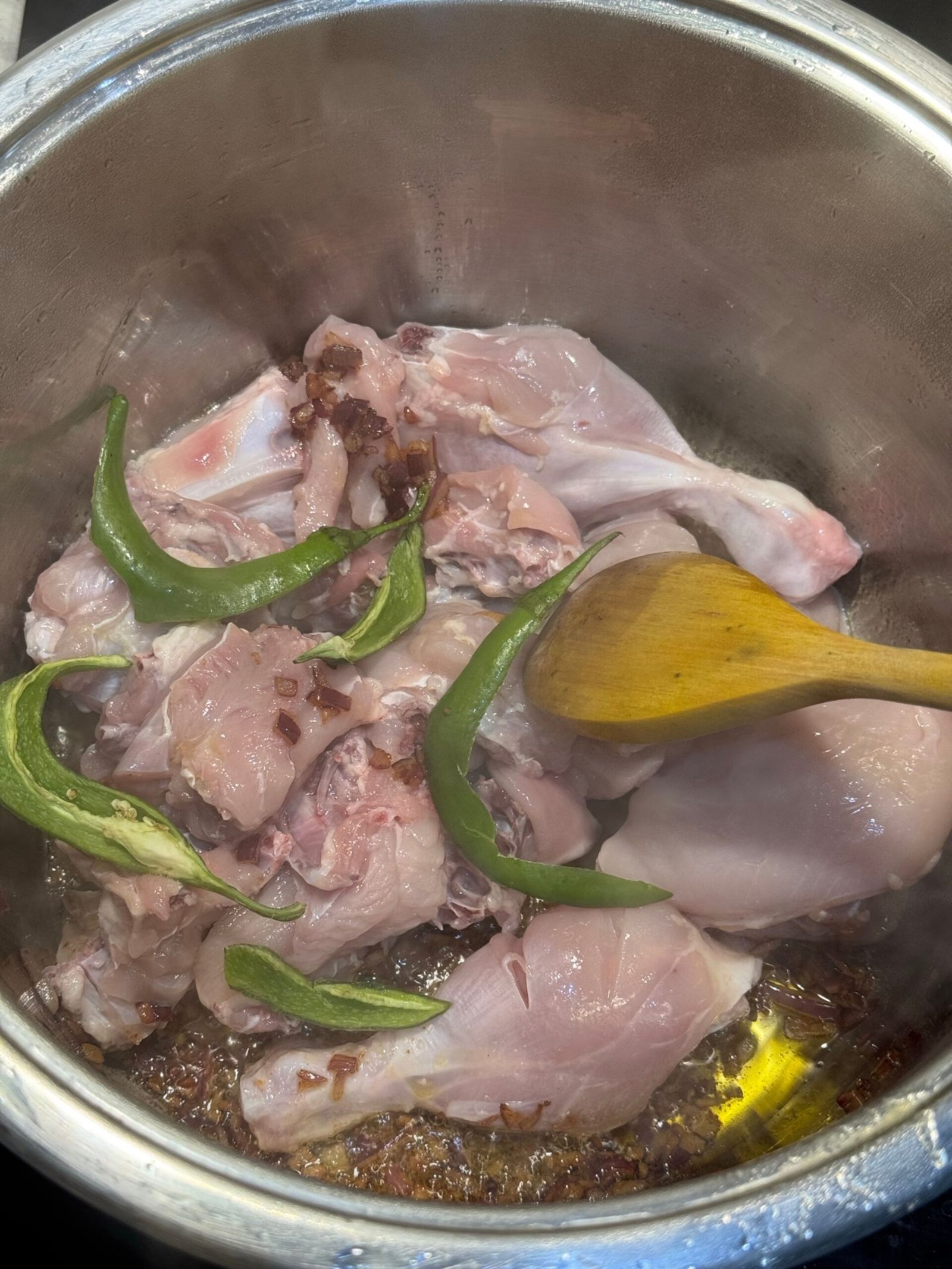
- Add the chicken. Toss in the chicken pieces along with 1 teaspoon of salt and the halved green chilies. Sauté on high heat for about 5 minutes. The chicken will change color, release water, then start to sizzle again as that water cooks off. This is the bhunai stage, and it's where the depth of flavor gets built. Don't rush it.
Step 2: Tomatoes, Aromatics, and Spices
- Add tomatoes, garlic, and ginger. Reduce the heat to medium. Add the diced tomatoes, garlic paste, and ginger paste. Stir well and cook for 5 minutes, letting the tomatoes start to break down.
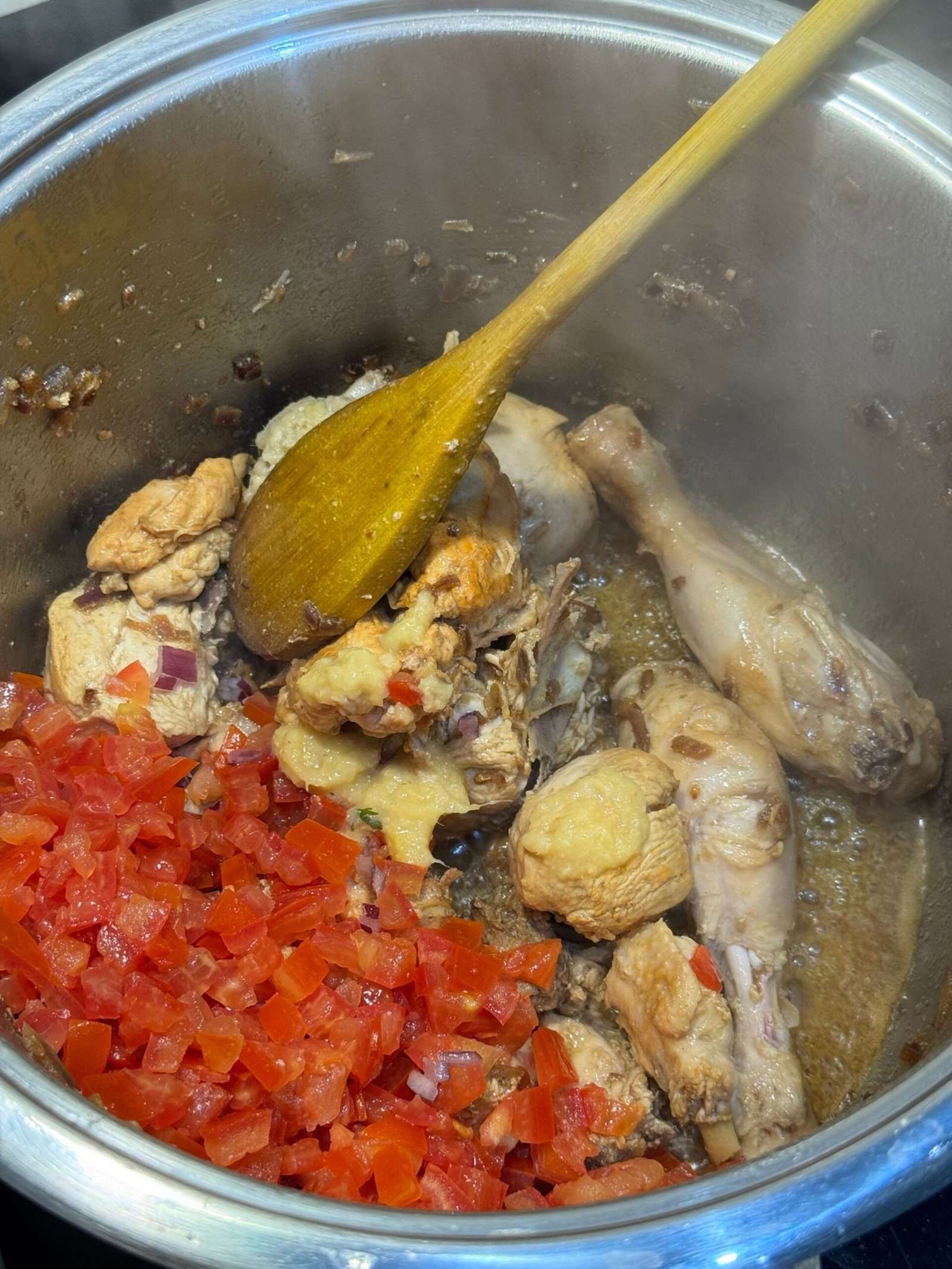
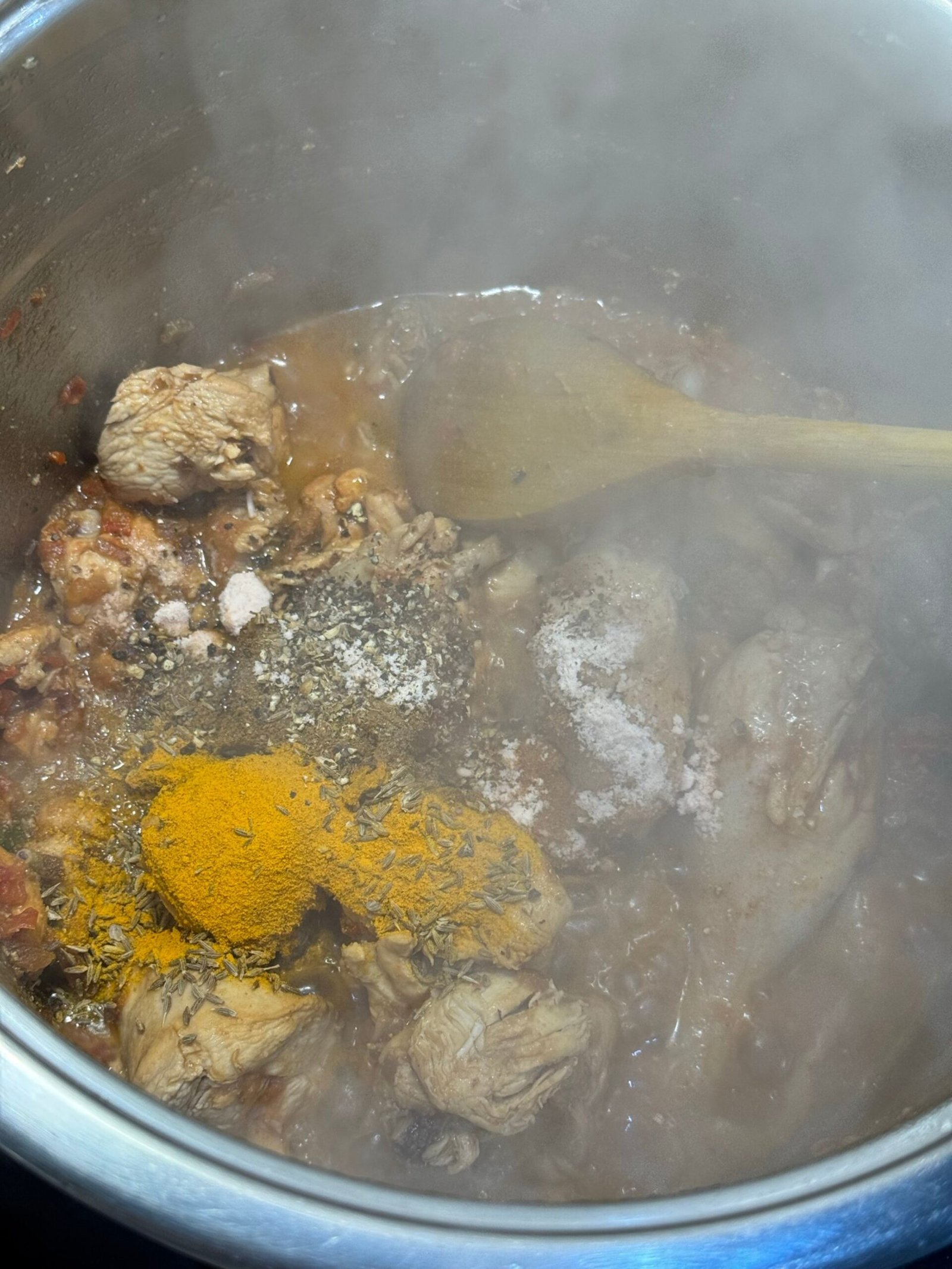
- Add the dry spices. Sprinkle in the coriander powder, cumin powder, red chili powder, and remaining salt. Stir to coat everything and cook for another 5 minutes on medium. The masala should start looking glossy and unified, not like separate ingredients anymore.
Step 3: Yogurt and Butter Finish
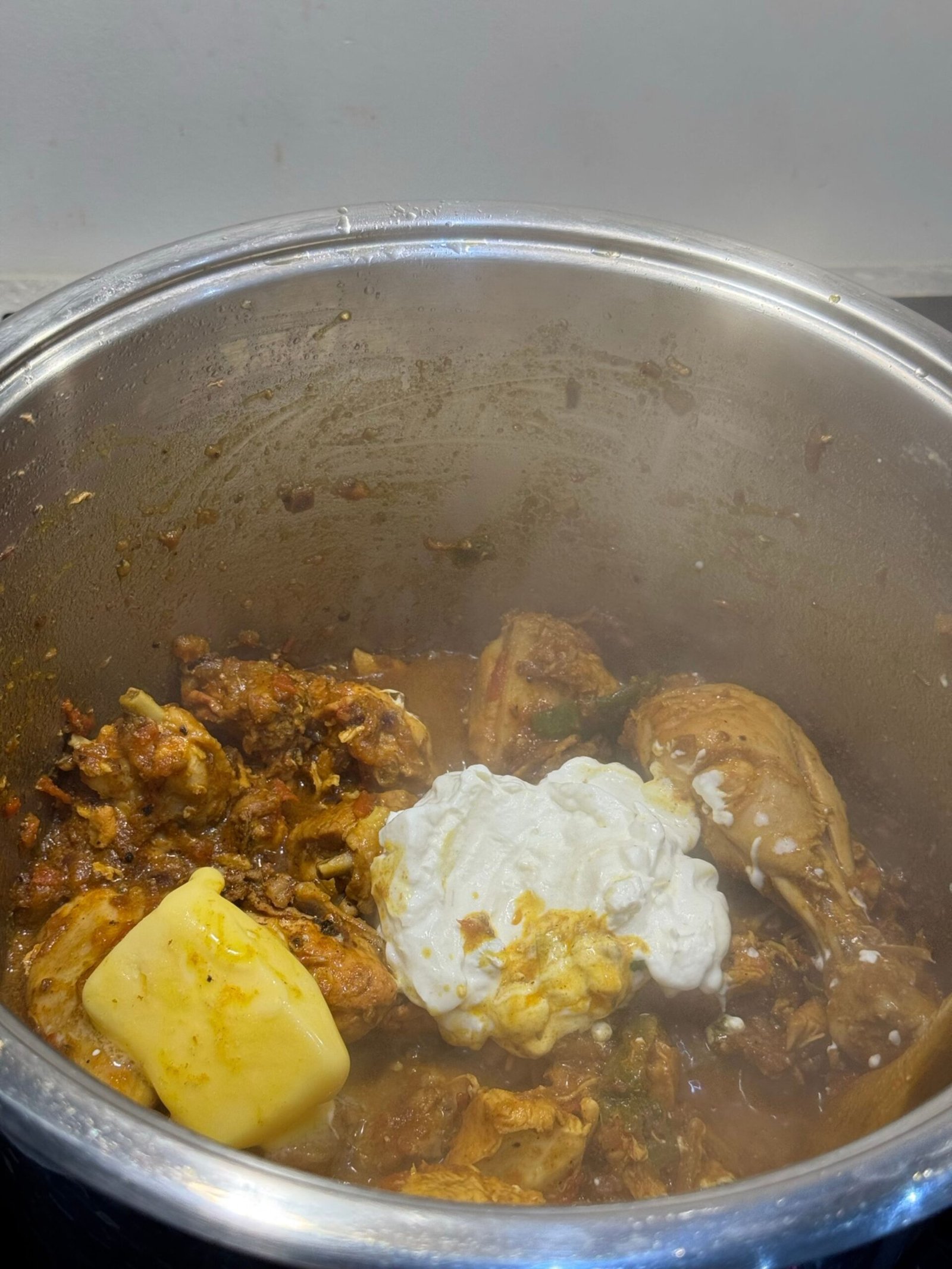
- Stir in the yogurt and butter. Add the room-temperature yogurt (whisked smooth) and the 3 tablespoons of butter. Give it a good stir. Cover the pan, keep the heat on medium, and cook for 10 minutes. Stir once in the middle. This is where the magic happens (the butter melts into the yogurt, coats the chicken, and gives you that rich, restaurant-style finish).
Step 4: Reduce and Garnish
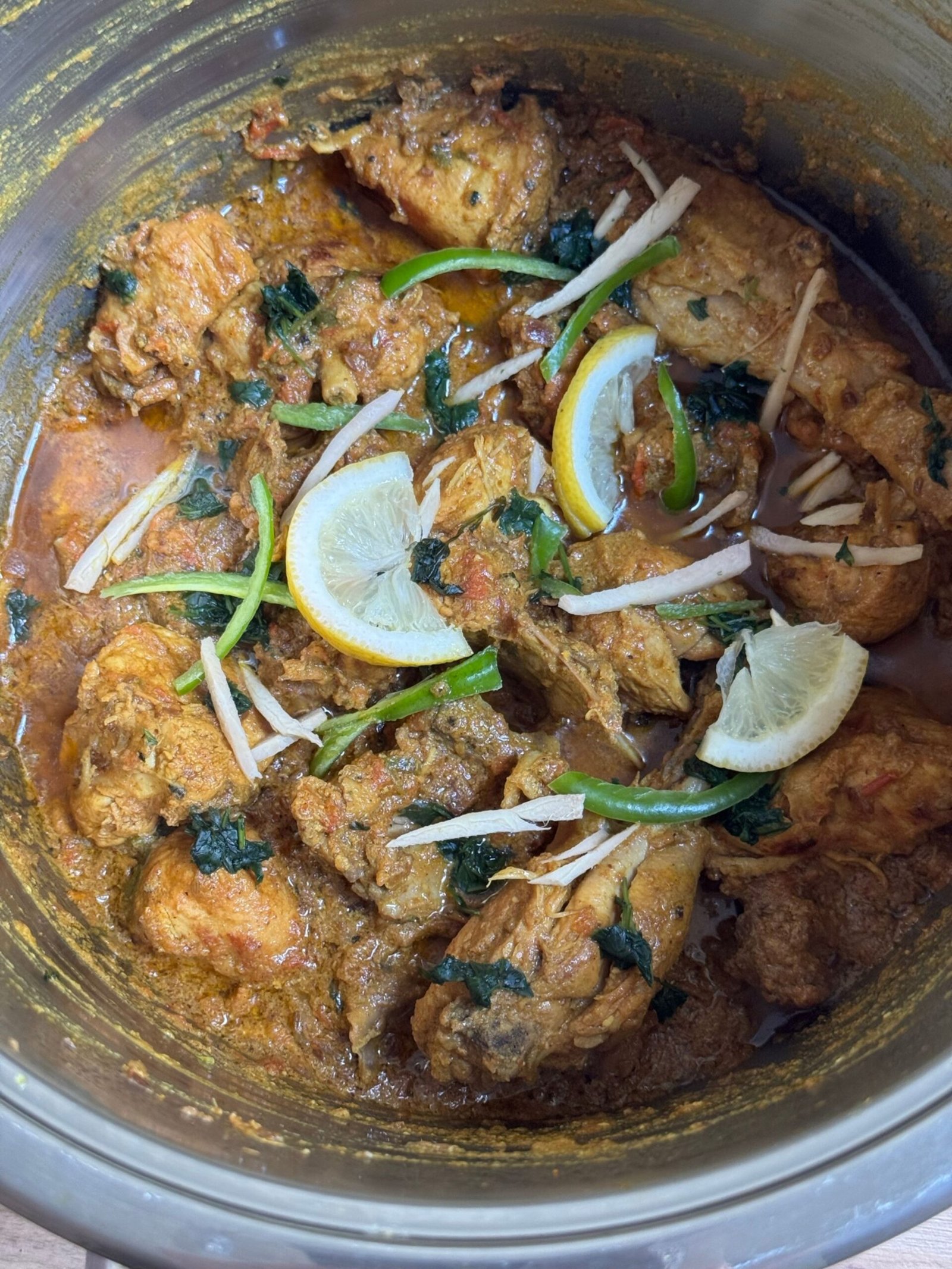
- Uncover and reduce. Turn the heat back up to high. Sauté for about 10 minutes, stirring often, until the excess liquid has cooked off and you can see the oil separating from the masala (this is the tell that your karahi is DONE). Taste and adjust salt.
- Finish with freshly ground black pepper and garam masala. Sprinkle both in and give it one last stir.
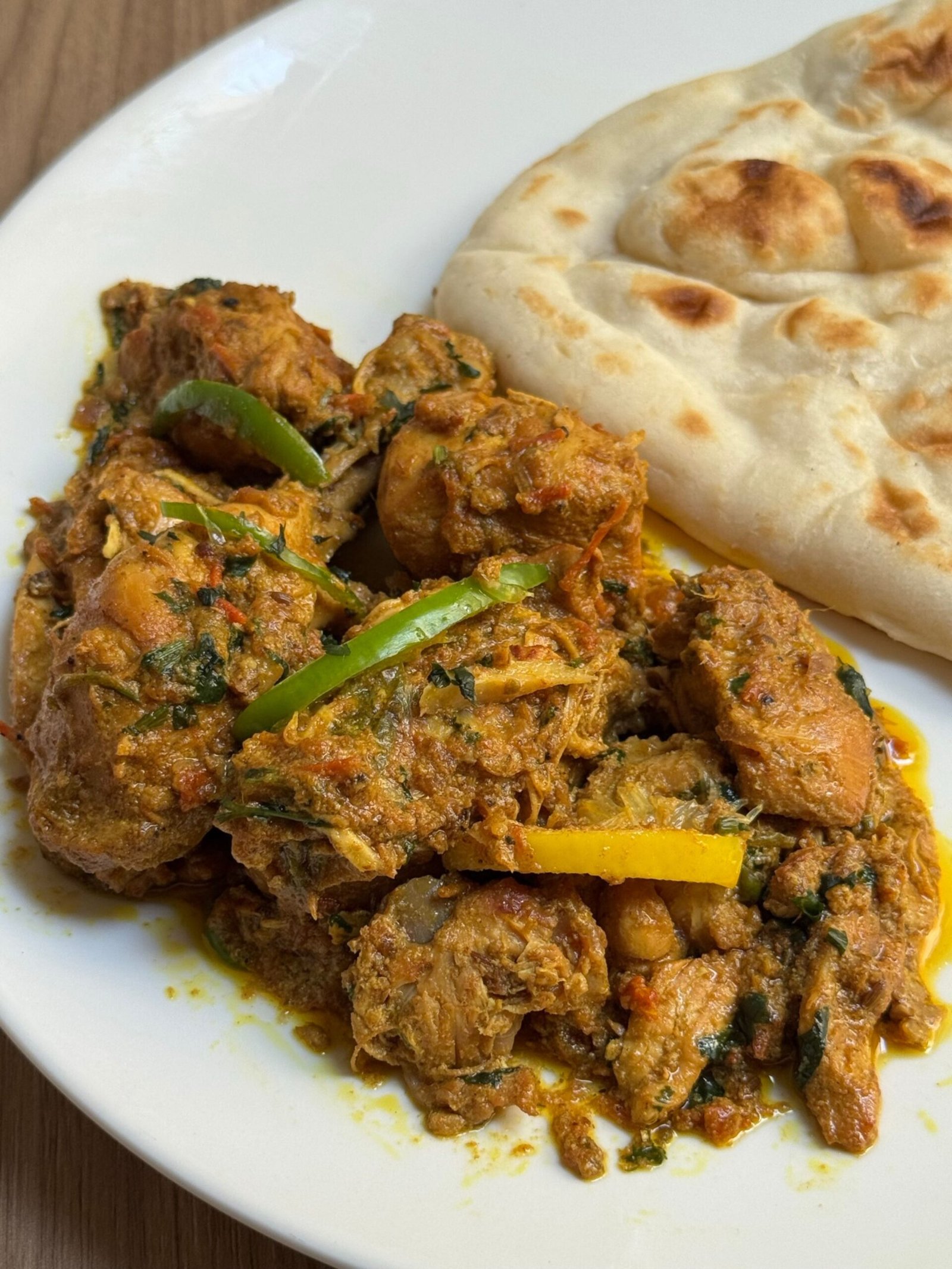
- Garnish and serve. Top with julienned fresh ginger, slit green chilies, chopped cilantro, and lemon slices. Serve hot with fresh naan.
Tips for the Best Chicken Karahi
- Freshly ground black pepper is NOT optional. Karahi lives and dies on black pepper. Pre-ground pepper tastes flat and dusty. Grind it fresh right before you finish the curry. You'll taste the difference in ONE bite. (Heh.)
- Too much liquid at the end? If you're using a smaller or narrower pan, sometimes the tomato water doesn't reduce fast enough. If you're stuck at the reduce stage and worried the chicken is going to fall apart, carefully spoon out the excess liquid into a small saucepan, reduce it there, and pour it back in. Saves the chicken texture.
- How to prevent yogurt from curdling:
- Use full-fat yogurt (Greek or regular, but full-fat, never low-fat).
- Bring it to room temperature before adding.
- Whisk it smooth first.
- Add it when the heat is on medium (not high), and stir it in gradually.
- My mom's tomato-skin trick. If you don't like the tomato skins in your finished karahi (some people can't stand the texture), quarter your tomatoes before adding them in Stage 2. Cover the pan and cook for 5 to 10 minutes. The skins will loosen and peel right off, and you can lift them out with tongs.
- Cooking for 2 or 3 people? Use 1 pound of chicken and halve everything else. The technique stays EXACTLY the same.
How to Serve
Chicken Karahi is a "dry" curry (meaning minimal gravy), which makes it a natural pairing with any Pakistani bread. My first choice is fresh, hot naan (that's how Hassaan eats it every time). Tandoori paratha and roti work beautifully too. If you want rice, pair it with a lighter daal on the side so the rice has something to hold onto (plain basmati with dry karahi feels a little sad to me, but you do you).
On our dinner table, karahi goes out with a fresh onion salad (sliced onion, lemon juice, salt, chopped mint), yogurt raita, and lemon wedges for squeezing.
Make-Ahead and Storage
- Fridge. Store leftovers in an airtight container for up to 3 days. Reheat gently on the stovetop with a splash of water so the masala doesn't dry out.
- Freezer. Karahi freezes well for up to a month. Thaw overnight in the fridge, then reheat on the stove.
- Fresh is best. I'll say it plainly. Karahi tastes best the day it's made, when the tomatoes and black pepper are at their peak.
FAQ
Can I use tomato puree or blended tomatoes instead of chopped?
You can, but I don't recommend it if you're after that traditional dhaba or restaurant-style texture. Chopped tomatoes give you a distinct, chunky masala where you can still see and taste the pieces. Puree turns it into more of a smooth gravy.
Can I make this with boneless chicken?
Yes, but the flavor won't be the same. Bone-in chicken gives karahi its depth. If you're going boneless, cut the covered cooking time roughly in half and expect to spend longer on the reduce stage (Stage 4) to cook off the extra moisture.
Chicken breast or thigh?
Thigh, always. Breast dries out during the reduce stage, and karahi doesn't have enough gravy to hide dry chicken. If you must use breast, add an extra tablespoon of ghee and don't reduce as long.
Can I use tomato paste instead of fresh tomatoes?
Only if you've made karahi before and know how the masala should look and taste. Tomato paste means you'll need to add water for the chicken to cook (fresh tomatoes release enough water on their own that you don't need any extra). If this is your first karahi, stick with fresh tomatoes.
Can I make it dairy-free?
Yes. Skip the butter, increase the ghee (or use a neutral oil), and omit the yogurt. The masala will be a touch less rich but still delicious.
Can I make it ahead and reheat?
Yes. Store it in the fridge for up to 3 days or the freezer for up to a month. Fresh is always better, but leftover karahi still hits the spot.
Tried this recipe? Drop a comment and let me know how it turned out (I read every single one). If you're on Instagram, tag me @emaanskitchen_ so I can see your karahi.
Chicken Karahi - Authentic Pakistani Recipe
Equipment
- Heavy-bottomed pan or karahi about 12 inches wide
- Whisk for yogurt
- Sharp knife
- Cutting board
Ingredients
For the Karahi
- 4 tbsp ghee
- 3 tbsp butter
- 1 small onion finely chopped
- 1½ tbsp garlic paste or freshly crushed garlic
- 1 tsp ginger paste or freshly crushed ginger
- 3 green chilies Indian finger or serrano, slit in half and deseeded
- 2 to 2.2 lbs skinless bone-in chicken, cut into small karahi cut pieces (make small slits on the leg pieces so the spices penetrate)
- 8 small Roma tomatoes diced (about 500 to 600g total)
- 2 tsp coriander powder
- 1 tbsp cumin powder
- 1 tsp red chili powder or to taste
- 2 tsp Himalayan pink salt or to taste, use whatever salt you have
- ¼ cup full-fat plain Greek yogurt room temperature and whisked smooth
- 1 tsp freshly ground black pepper plus more to finish
- 1 tsp garam masala
For Garnish
- 1 inch piece fresh ginger julienned
- 2 small green chilies julienned
- Small handful fresh cilantro chopped
- Lemon slices for serving

Instructions
- Heat the ghee and cook the onion. In a heavy-bottomed pan or karahi over medium-high heat, melt the ghee. Add the finely chopped onion and sauté for about 3 minutes, until lightly golden.
- Sauté the chicken. Add the chicken pieces, 1 tsp of the salt, and the halved green chilies. Sauté on high heat for about 5 minutes, until the color of the chicken changes and it stops releasing water. This is the bhunai stage that builds the flavor base.
- Add tomatoes, garlic, and ginger. Reduce heat to medium. Add the diced tomatoes, garlic paste, and ginger paste. Stir well and cook for 5 minutes.
- Add the dry spices. Sprinkle in the coriander powder, cumin powder, red chili powder, and remaining 1 tsp salt. Stir to coat, and cook for another 5 minutes on medium.
- Add the yogurt and butter. Stir in the whisked yogurt and butter. Cover, keep the heat on medium, and cook for 10 minutes. Stir once halfway through.
- Uncover and reduce. Raise the heat to high. Sauté for 10 minutes, stirring often, until the excess liquid has cooked off and the oil starts to separate from the masala. Taste and adjust salt.
- Finish and garnish. Sprinkle in the freshly ground black pepper and garam masala. Give it a final stir, then top with the julienned ginger, julienned green chilies, chopped cilantro, and lemon slices. Serve hot with fresh naan.
Notes
- Traditional Pakistani Chicken Karahi doesn't include onion, but I add one small onion to mine because I love the extra masala depth it produces. If you want to keep it fully traditional, skip the onion (everything else in the recipe stays the same).
- Freshly ground black pepper is essential. Pre-ground pepper won't give you the same depth. Grind it fresh right before you finish the curry.
- Dairy-free version. Skip the butter, increase the ghee (or use a neutral oil), and omit the yogurt. The masala will be a touch less rich but still delicious.
- Boneless chicken swap. You can use boneless, but the flavor won't be quite the same. Reduce the covered cooking time (step 5) by half and expect to spend longer at the reduce stage (step 6) to cook off the extra moisture.
- Tomato-skin trick. If you don't like tomato skins in your finished curry, quarter the tomatoes before adding them, cover the pan for the first 5 to 10 minutes, and the skins will loosen and lift off easily with tongs.
- Storage. Refrigerate leftovers in an airtight container for up to 3 days, or freeze for up to a month. Reheat gently on the stovetop with a splash of water. Fresh is best.


0 Comments