
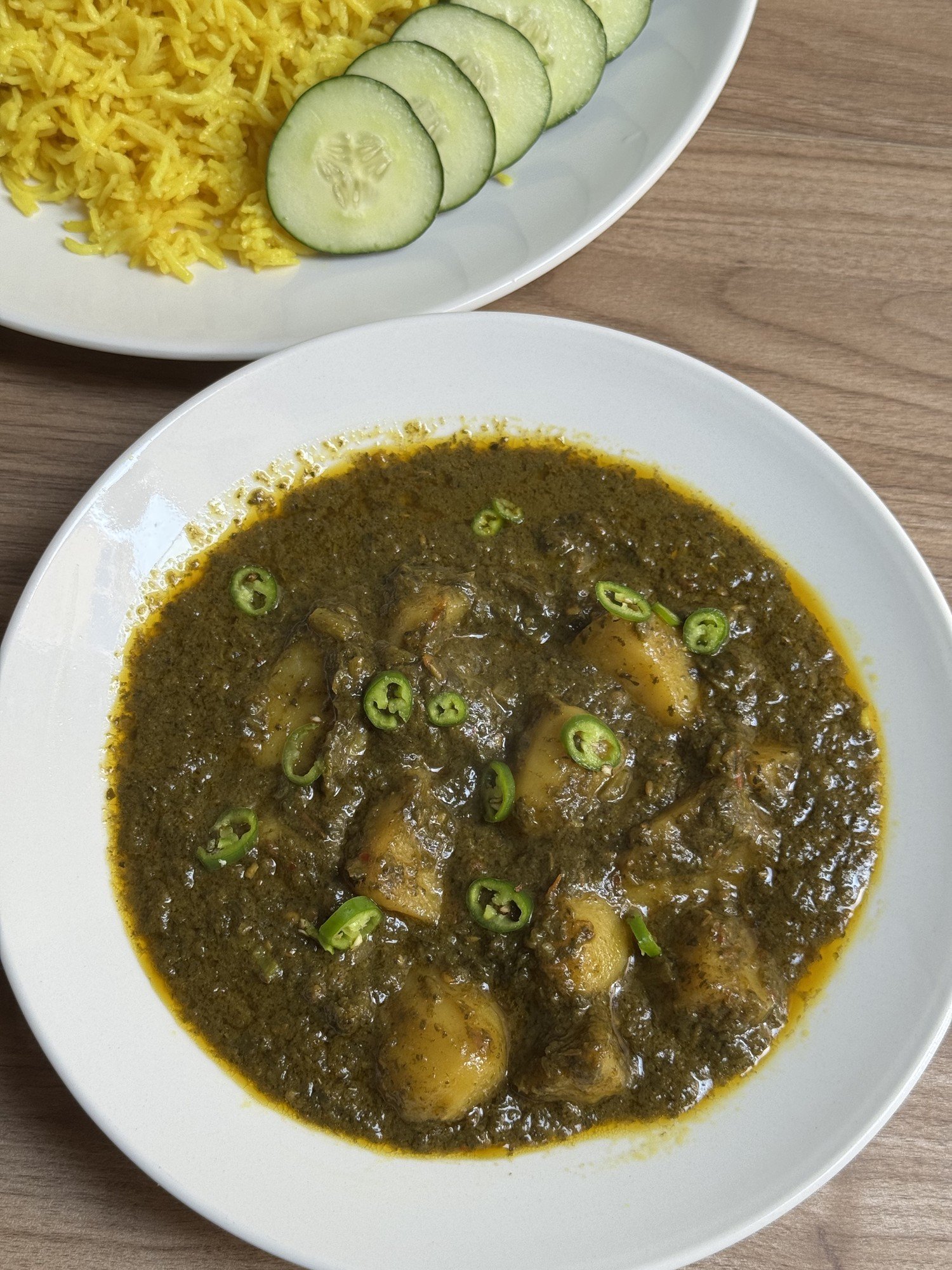
Aloo Ghosht is the dish that lives on every Pakistani dinner table. It's not fancy, it's not a special-occasion recipe — it's the everyday curry that mothers make on Tuesday nights and grandmothers have opinions about. Every household makes it slightly differently, and every household thinks their version is the correct one.
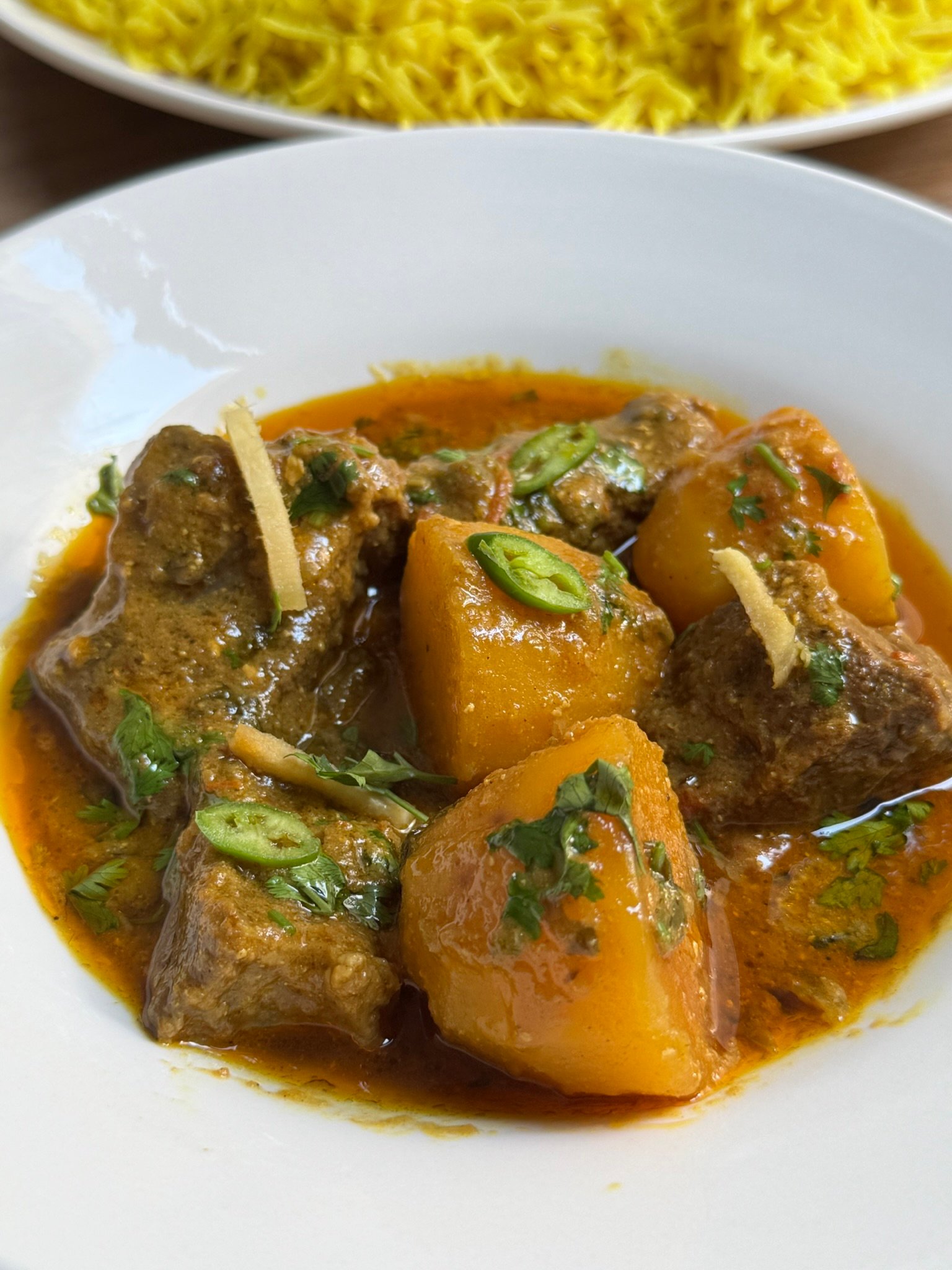
What makes this version worth trying? The bhunai. Thirty minutes of frying the meat with yogurt and whole spices before the water goes in. It's the step most home cooks rush through, and it's the difference between a good salan and a great one.
What is Aloo Ghosht?
The name is exactly what the dish is — aloo is potato, ghosht is meat. Bone-in mutton, lamb, or beef simmered in a spiced tomato-onion gravy until fork-tender, with halved potatoes cooked in the same pot until they soak up all that flavor.
You'll find versions of Aloo Ghosht across Pakistan and North India, with regional differences. Punjabi versions lean heavier on ghee and whole spices. Sindhi versions often go spicier. This recipe is a standard Pakistani home-style preparation — the kind you'd get if you showed up unannounced at someone's house for dinner on a weeknight.
Ingredient Notes
This section is about what to look for at the store and why each choice matters. All measurements are in the recipe card at the bottom.
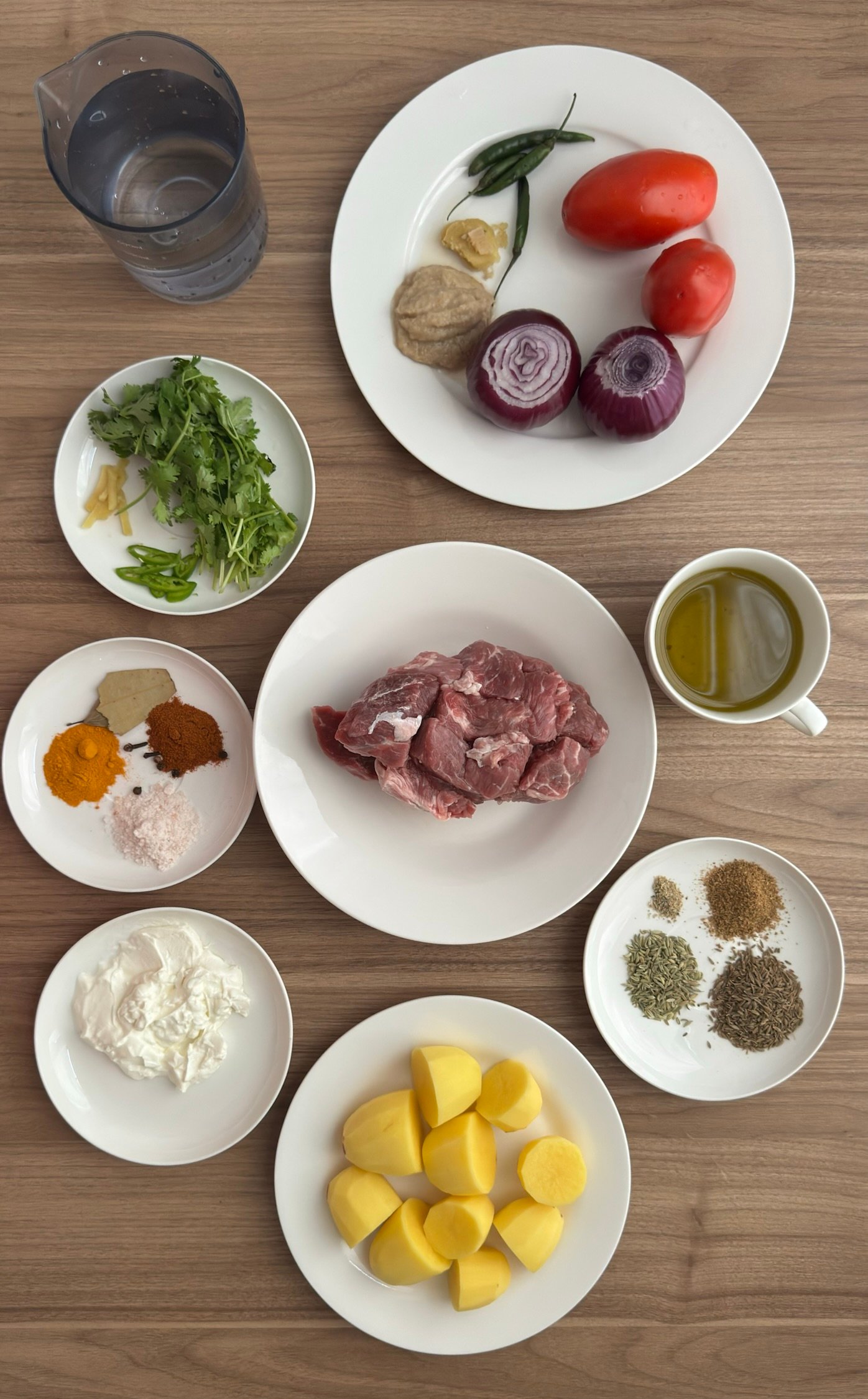
- Meat — bone-in vs. boneless. Bone-in mutton or lamb (shoulder or leg cut into medium pieces) is traditional and gives you the richest gravy. The bones release gelatin as they cook, which is what makes the salan silky rather than watery. Beef works well too — chuck roast or a similar stewing cut. Boneless works but you lose some of the depth. Chicken is a different dish (see the FAQ), but valid.
- Potatoes — halved, not cubed. Cut them into large halves so they hold their shape through the simmer. Cubes turn to mush. Red-skin potatoes are a good choice because they hold together better than russets, but any waxy potato works. DO NOT use baking potatoes — they fall apart.
- Onions and tomatoes — fried, THEN blended. This is the differentiator. A lot of home cooks throw raw onion-tomato paste into the pot. This recipe fries them first, then blends them into a smooth base with an immersion blender. It's the trick behind restaurant-style silky gravy.
- Ginger-garlic paste. Fresh is best. If you're making it at home, roughly equal parts ginger and garlic with a splash of water in a blender or mortar. Store-bought jarred paste works in a pinch but has a sharper, less rounded flavor.
- Yogurt — full-fat, plain. Non-negotiable for the bhunai step. Full-fat gives you richness and helps the oil separate cleanly at the end. Low-fat yogurt splits and turns grainy. Greek yogurt works but thin it with a splash of water first.
- Fresh spice blend (dry-roasted at the end). This is the aromatic finishing touch — whole cumin seeds, fennel seeds, coriander seeds, black cardamom powder, and coriander powder, dry-roasted and ground. Pre-ground spices work if you're short on time, but the difference is REAL. Fennel seeds are the secret ingredient most Aloo Ghosht recipes leave out — they add a warm, subtle sweetness that ties the whole dish together.
- Black cardamom, NOT green. Black cardamom (badi elaichi) is smoky, earthy, and much stronger than green cardamom. It belongs in savory curries. Green cardamom belongs in desserts and chai. Do not swap them — the flavor is completely different.
- Green chilies — deseeded. Deseeding lets you keep the fresh chili flavor without making the curry punishingly hot. For the garnish chilies, keep the seeds if you like heat — they're added raw at the end and give a fresh bite.
The Techniques That Make or Break It
The recipe card tells you what to do. This section covers the judgment calls that separate a flat, watery curry from a proper Pakistani home-style salan.
Blend the base — but fry it first
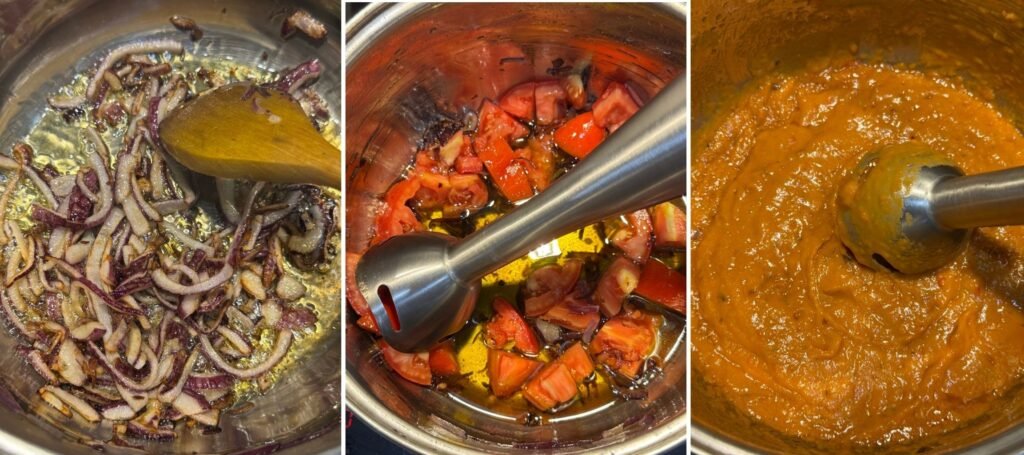
Most home cooks either fry raw onions and tomatoes in chunks, or blend them raw and throw the paste in. This recipe does both, in order — fry the onions until golden, add tomatoes and cook them down, then blend everything smooth with an immersion blender.
The frying step develops sweetness and depth. The blending step gives you a silky, restaurant-style gravy with no visible onion skins or tomato chunks. Do it right in the pressure cooker so you don't dirty a second bowl.
The bhunai — 30 minutes that change everything
Bhunai is the Urdu word for frying meat with spices before adding liquid, and this recipe leans on it hard. You'll fry the meat with the paste, ginger-garlic, and whole spices for 15 minutes, then add yogurt and green chilies and fry for another 15 minutes.
This step is where the flavor lives. What's happening is the meat is browning, the yogurt is reducing and coating each piece, and the spices are blooming in the oil. It looks like forever when you're standing over the pan, but you cannot skip it or shortcut it. The finished dish will taste flat if you do.
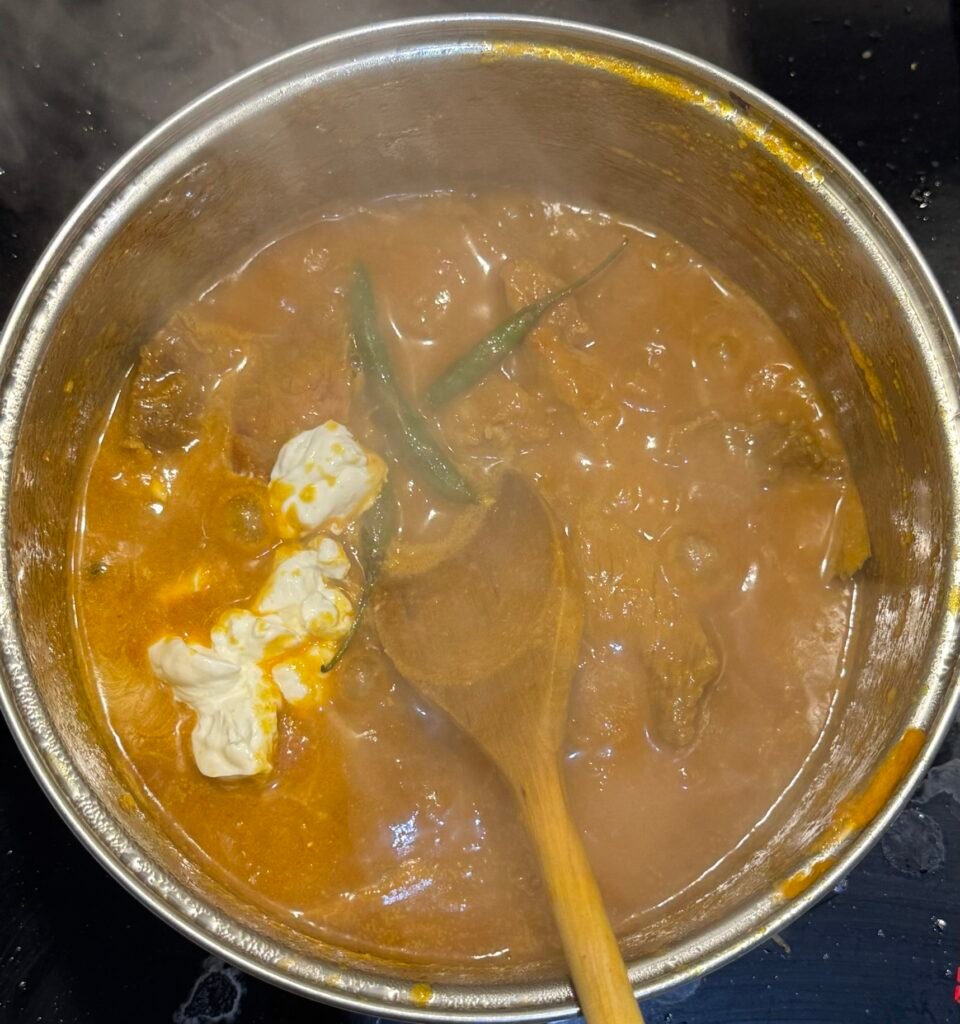
The visual cue you're waiting for at the end of the bhunai is oil starting to separate from the paste and pool at the edges of the pan. That's when it's ready for water.
Add the potatoes AFTER the meat is nearly done
Timing matters. If you add potatoes with the meat at the start, they'll turn to mush before the meat is tender. If you add them too late, the outside will be soft while the center is still raw.
The rule: pressure cook the meat until it's ALMOST tender (nearly cooked through but not falling apart), then release the pressure and add the halved potatoes. Simmer uncovered on medium heat for 15–20 minutes until the potatoes are cooked through and the gravy has thickened.
The finishing spice blend goes in LAST
The dry-roasted spice blend — cumin, fennel, coriander, black cardamom — is a finishing touch, not a cooking spice. You add it in the last minute, off the heat, so its aroma stays fresh and bright.
If you add these spices at the start with the whole spices, they'll cook out and disappear. Adding them at the end is what gives you the top-note aroma that hits you when you lift the lid at the table.
Read the rogan (the oil layer)
The traditional Pakistani doneness cue for any salan is a thin layer of oil floating on top — this is called rogan, or sometimes tarri. It means the meat has fried properly during the bhunai, the yogurt has broken and integrated, and the gravy has reduced to the right consistency.
If your rogan doesn't appear, it usually means you either rushed the bhunai or used low-fat yogurt. If the oil layer is too thick, you used too much oil at the start — next time cut it back to ½ cup. A clean, thin oil layer is the sign of a well-cooked salan.
Tips
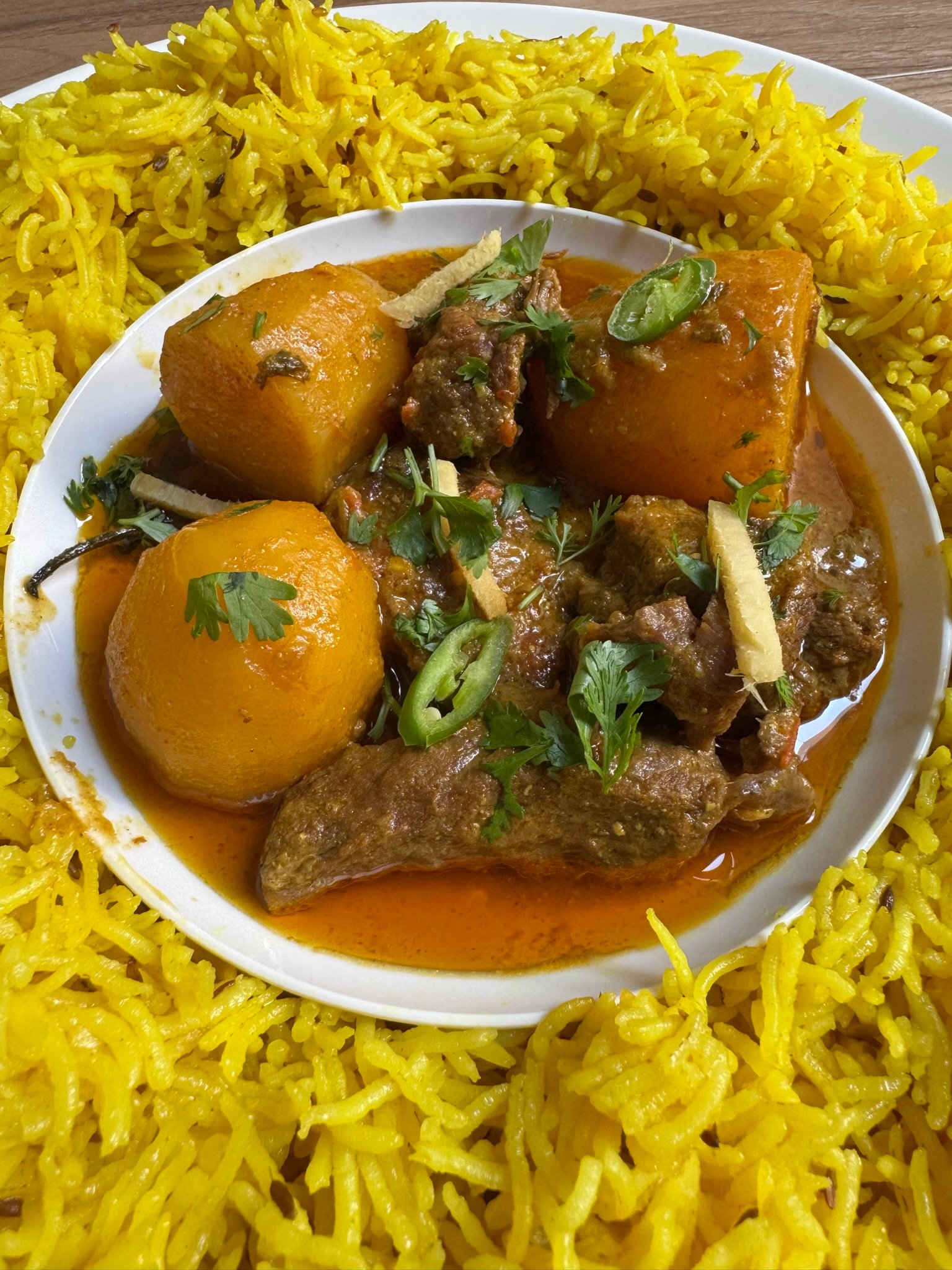
- Adjust gravy thickness to what you're serving with. For rice, add ½ cup extra warm water during the potato simmer for a looser gravy. For naan or roti, let it simmer uncovered a few extra minutes to thicken.
- Make the fresh spice blend in bulk. Dry-roast and grind a bigger batch, store in an airtight jar for up to a month. Saves 5 minutes on future cooks.
- No pressure cooker? Simmer the meat covered on low heat for 1.5–2 hours instead of pressure cooking. Check water level occasionally so it doesn't dry out.
- Freezes well. Cool completely, freeze in portions for up to 2 months. Thaw in the fridge overnight, reheat gently on the stove with a splash of water.
- DO NOT stir aggressively after adding the potatoes — you'll break them. Gentle folds only.
What to Serve with Aloo Ghosht
Aloo Ghosht is a one-pot main, so it just needs bread or rice and something fresh alongside.
Warm naan or plain roti is the classic pairing — you use the bread to scoop up the gravy and the meat. For a rice pairing, plain basmati or a simple cumin rice works better than anything flavored, because you want the salan to be the star.
On the side, a kachumber salad (finely diced onion, tomato, cucumber, lemon juice, salt, green chili) cuts the richness perfectly. A small bowl of plain yogurt or raita cools things down if the curry runs spicier than expected.
If you're a meat lover try Beef Tomato Stir-Fry or Baked Beans with Ground Beef recipes next.
Aloo Ghosht (Pakistani Meat and Potato Curry)
Ingredients
For the curry base
- 1 kg meat bone-in mutton, lamb, or beef preferred; boneless works
- 5 medium potatoes cut into halves
- 2 small onions sliced
- 2 medium tomatoes chopped
- 1 tsp ginger paste
- 1 tbsp garlic paste
- 3 whole green chilies deseeded
- Slightly more than ½ cup cooking oil
- 2 tbsp full-fat plain yogurt
- 4 cups water
- 1 tbsp salt
- 1 tsp turmeric powder
- 1 tsp cayenne / red chili powder
- Whole spices for cooking
- 1 bay leaf
- 3 whole cloves
- 3 whole black peppercorns
Fresh spice blend (dry-roasted and ground, added at the end)
- 1 tsp whole cumin seeds
- ½ tsp fennel seeds
- 1 tsp coriander powder or whole coriander seeds if dry-roasting
- 2 pinches of black cardamom powder
For garnish
- Handful of fresh coriander leaves chopped
- 1 inch fresh ginger julienned
- 2 medium green chilies finely chopped

Instructions
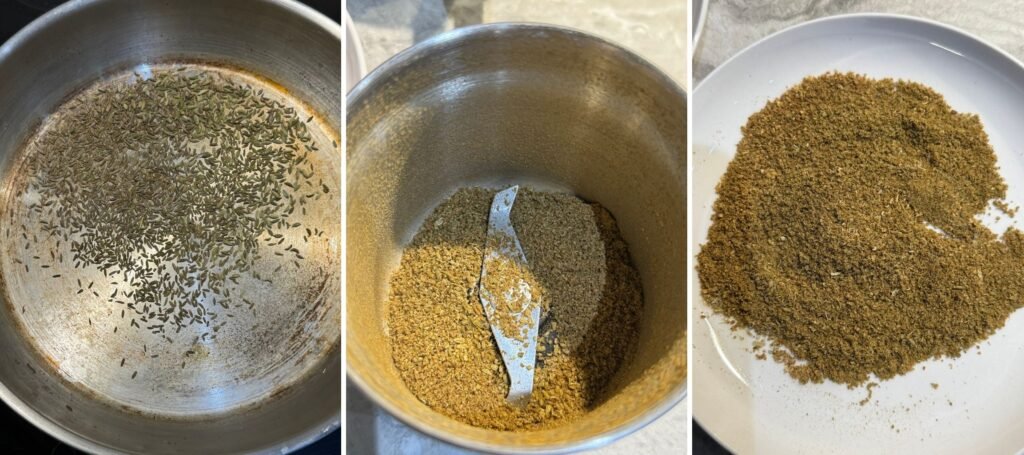
- Prepare the fresh spice blend: Dry-roast the cumin seeds, fennel seeds, and coriander seeds (if using whole) in a small pan over low heat for about 1 minute until fragrant. Let them cool, then grind into a fine powder. Mix with the black cardamom powder and coriander powder. Set aside for the end.
- Fry and blend the base: Heat the oil in a pressure cooker over medium heat. Add the sliced onions and sauté until light golden brown, about 5–7 minutes. Add the chopped tomatoes and fry for 2–3 minutes until softened. Remove from heat and use an immersion blender to blend everything into a smooth paste right in the pressure cooker.
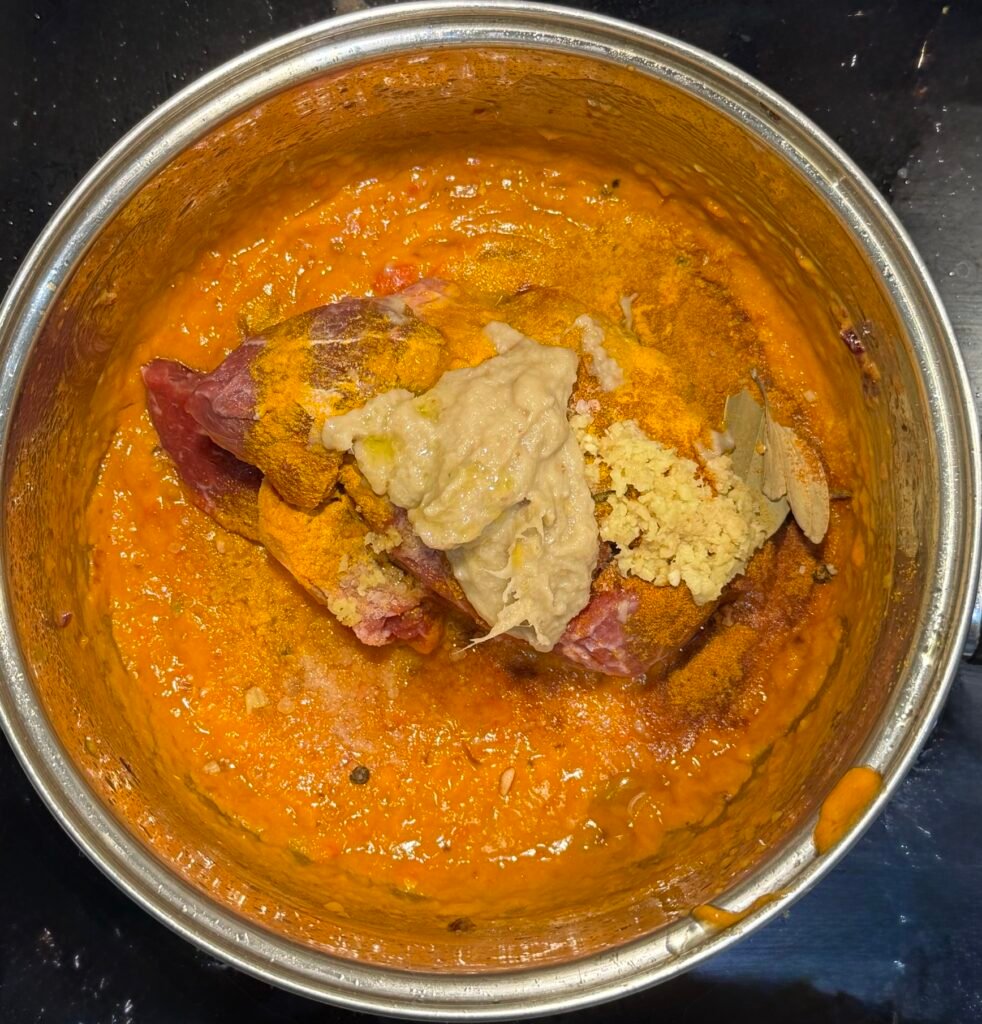
- Bhunai part 1 - fry the meat: Add the meat, ginger paste, garlic paste, bay leaf, cloves, and black peppercorns to the blended paste. Add 1 tbsp salt, 1 tsp turmeric, and 1 tsp cayenne. Fry over medium-high heat for 15 minutes, stirring occasionally, until the meat is well seared and coated in the spice paste.
- Bhunai part 2 - add yogurt: Add the 2 tbsp yogurt and 3 whole deseeded green chilies. Continue to fry for another 15 minutes on medium heat, stirring occasionally, until the oil begins to separate from the spice paste at the edges. DO NOT skip or rush this step.
- Pressure cook the meat: Pour in 4 cups of water. Close the pressure cooker lid and cook for about 10 minutes until the meat is almost tender — nearly cooked through but not falling apart.
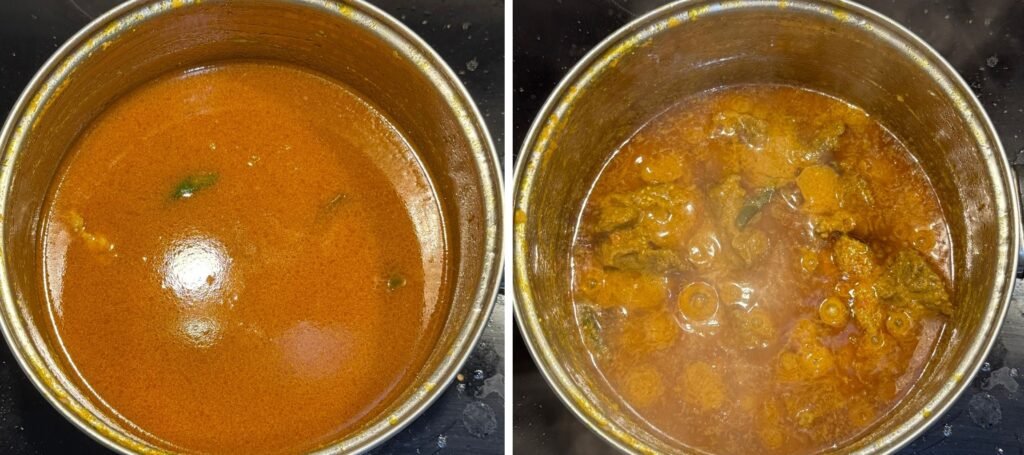
- Add the potatoes: Carefully release the pressure and open the lid. Add the halved potatoes to the curry. Cover and simmer on medium heat for 15–20 minutes until the potatoes are fully tender and cooked through, and a thin layer of oil (rogan) has risen to the top.
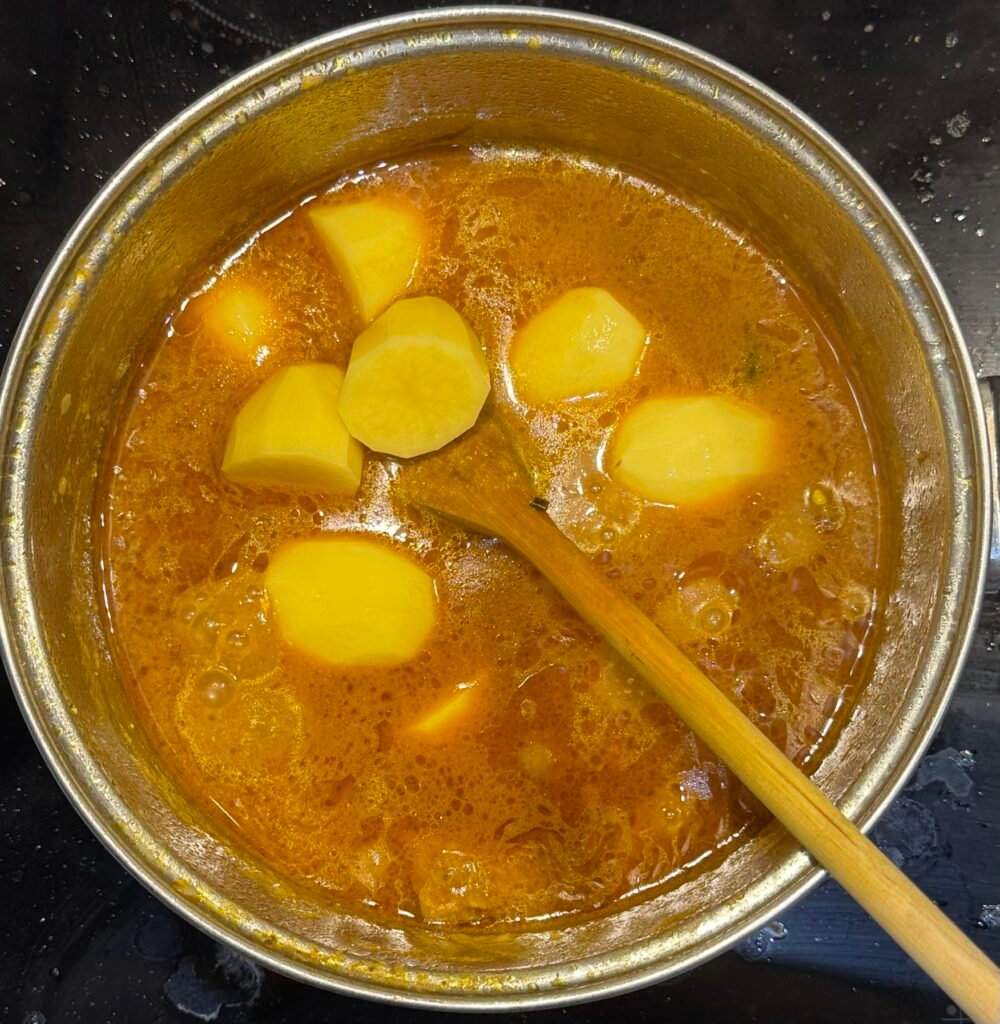
- Finish with the spice blend: Sprinkle the prepared fresh spice blend evenly over the curry. Stir gently to combine. Turn off the heat.
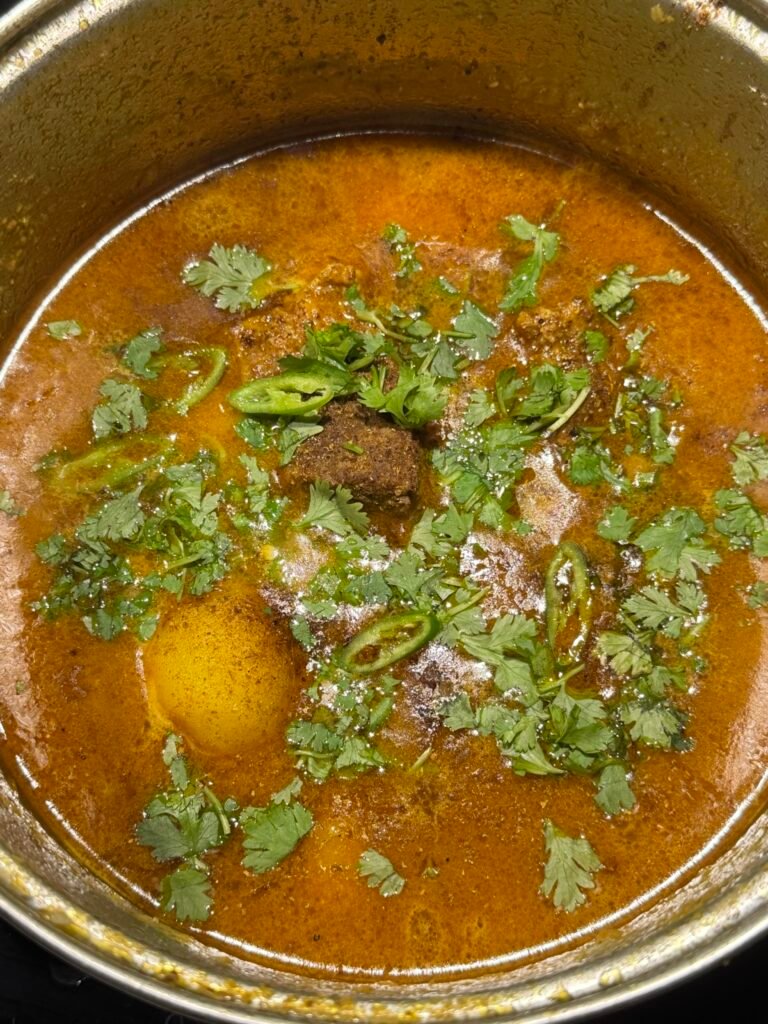
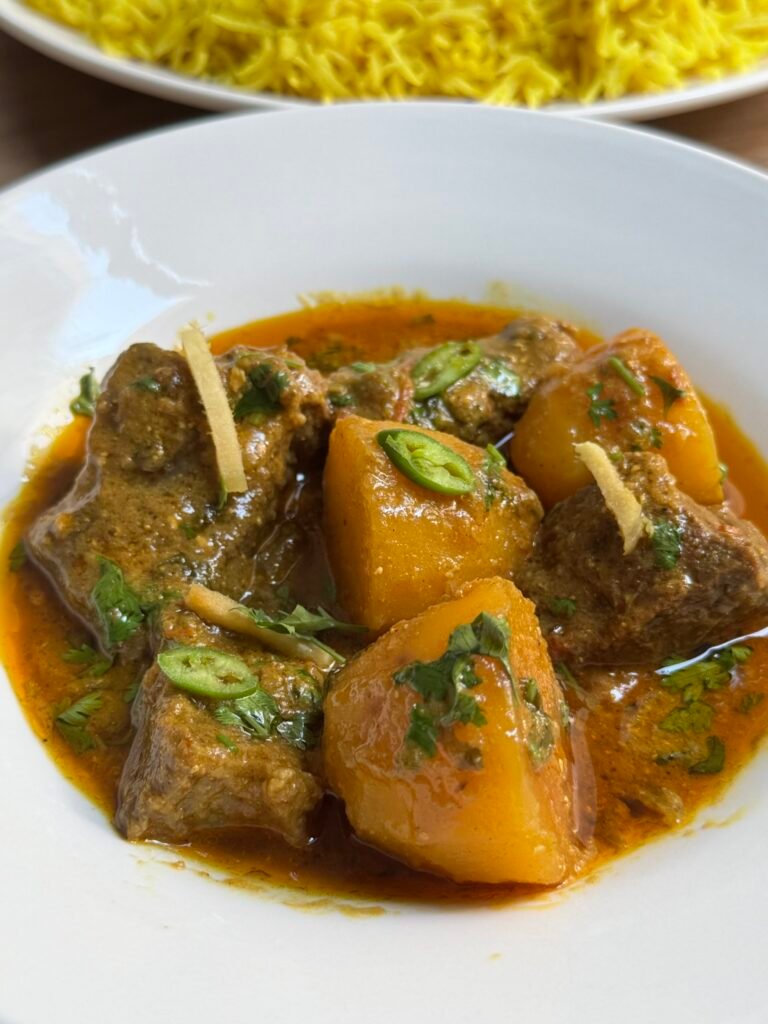
- Garnish and serve: Top with fresh chopped coriander, julienned ginger, and finely chopped green chilies. Serve hot with naan, roti, or basmati rice.
Notes
- The rogan (oil layer) is the traditional Pakistani cue that your salan is properly cooked. A thin, clean layer of oil floating on top means the bhunai worked. If it doesn't appear, the meat was rushed during frying or the yogurt was too low-fat.
- Thinner gravy for rice - add ½ cup extra warm water during the final simmer with the potatoes.
- Thicker gravy for naan or roti - simmer uncovered for a few extra minutes after the potatoes are cooked.
- Deseeding green chilies during cooking keeps the fresh chili flavor without making the curry too spicy. Keep seeds in the garnish chilies for a fresh raw kick.
- Red-skin or waxy potatoes hold their shape best. Avoid baking potatoes.
- No pressure cooker? Simmer covered on low heat for 1.5–2 hours instead of pressure cooking. Check the water level occasionally.
- Storage. Keeps 3 days in the fridge, tastes even better the next day. Freezes well up to 2 months
Frequently Asked Questions
Can I use chicken instead of mutton or beef?
Yes. Reduce the frying time in the bhunai step to about 7–8 minutes each stage (instead of 15), and skip the pressure cooking entirely. Simmer the chicken covered on medium heat until it's nearly cooked through, then add the potatoes and finish as directed. Bone-in chicken pieces give better flavor than boneless.
What's the best cut of meat for Aloo Ghosht?
Bone-in goat or lamb shoulder/leg cut into medium pieces gives the richest, most gelatinous gravy. Beef chuck roast is a solid alternative. Boneless meat works but lacks some of the depth — if you go boneless, consider adding a couple of bones to the pot just for flavor and fish them out at the end.
Why do my potatoes break or turn mushy?
Three fixes. First, cut them into large halves, not cubes. Second, add them AFTER the meat is nearly tender, not at the start. Third, don't over-stir once they're in — gentle folds only. Red-skin or waxy potatoes hold their shape better than baking potatoes.
Do I have to dry-roast the spices at the end?
Not strictly, but the difference is noticeable. Dry-roasting whole cumin, fennel, and coriander releases their essential oils and adds a warm, toasted aroma to the finished dish. If you're short on time, pre-ground versions of these spices work — just add them at the end the same way.
Why blend the onions and tomatoes?
Blending the fried onions and tomatoes with an immersion blender gives you a smooth, restaurant-style gravy base with no chunky bits. It's the trick behind that silky Pakistani salan texture. If you skip the blending, your gravy will still taste good — it just won't have that professional finish.
Can I make this ahead?
Yes — Aloo Ghosht actually tastes better the next day as the flavors deepen. Cool completely, refrigerate for up to 3 days, and reheat gently with a splash of water on the stove. Freezes well for up to 2 months.


0 Comments