
Meethi Seviyan is the dessert I grew up eating on Eid mornings. My mother would make a huge platter of it before Fajr, and by the time we came back from prayers, the whole house smelled like ghee, cardamom, and roasted vermicelli. It's the kind of dish where the memory is baked into the recipe.
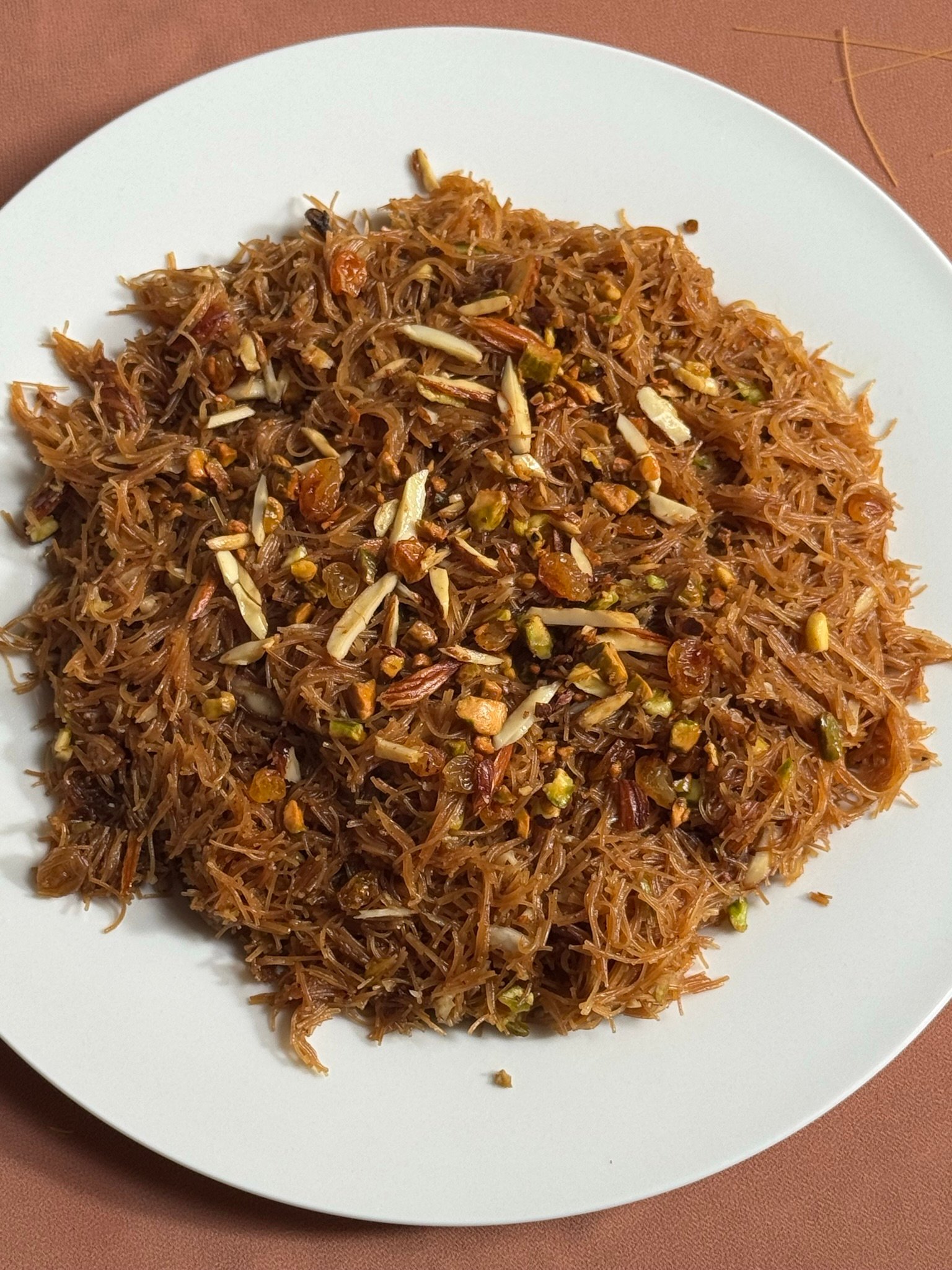
This is the DRY version — sukhi seviyan — not the milky kheer-style one most people think of when they hear "seviyan." Both are Eid staples, but they're completely different dishes. This one is fluffy, buttery, studded with nuts and raisins, and comes together in 20 minutes.
What is Meethi Seviyan (Sukhi Style)?
Meethi Seviyan just means "sweet vermicelli." In Pakistan and North India, the word covers two very different desserts.
The milky version — often called Sheer Khurma or seviyan kheer — is vermicelli simmered in sweetened milk with dates, nuts, and cardamom until it turns into a rich, spoonable pudding. The dry version (sukhi seviyan) is what this recipe makes. The vermicelli is toasted in ghee, cooked in a light sugar syrup infused with whole spices, and finished with fried nuts. It's fluffy rather than creamy, and every strand stays separate.
Sukhi seviyan is the more everyday, home-style preparation. It's what most Pakistani households make for Eid ul-Fitr breakfast alongside chai, and it travels well as a mid-morning sweet for guests.
Ingredient Notes
This section is about what to look for at the store and why each choice matters. All measurements are in the recipe card at the bottom.
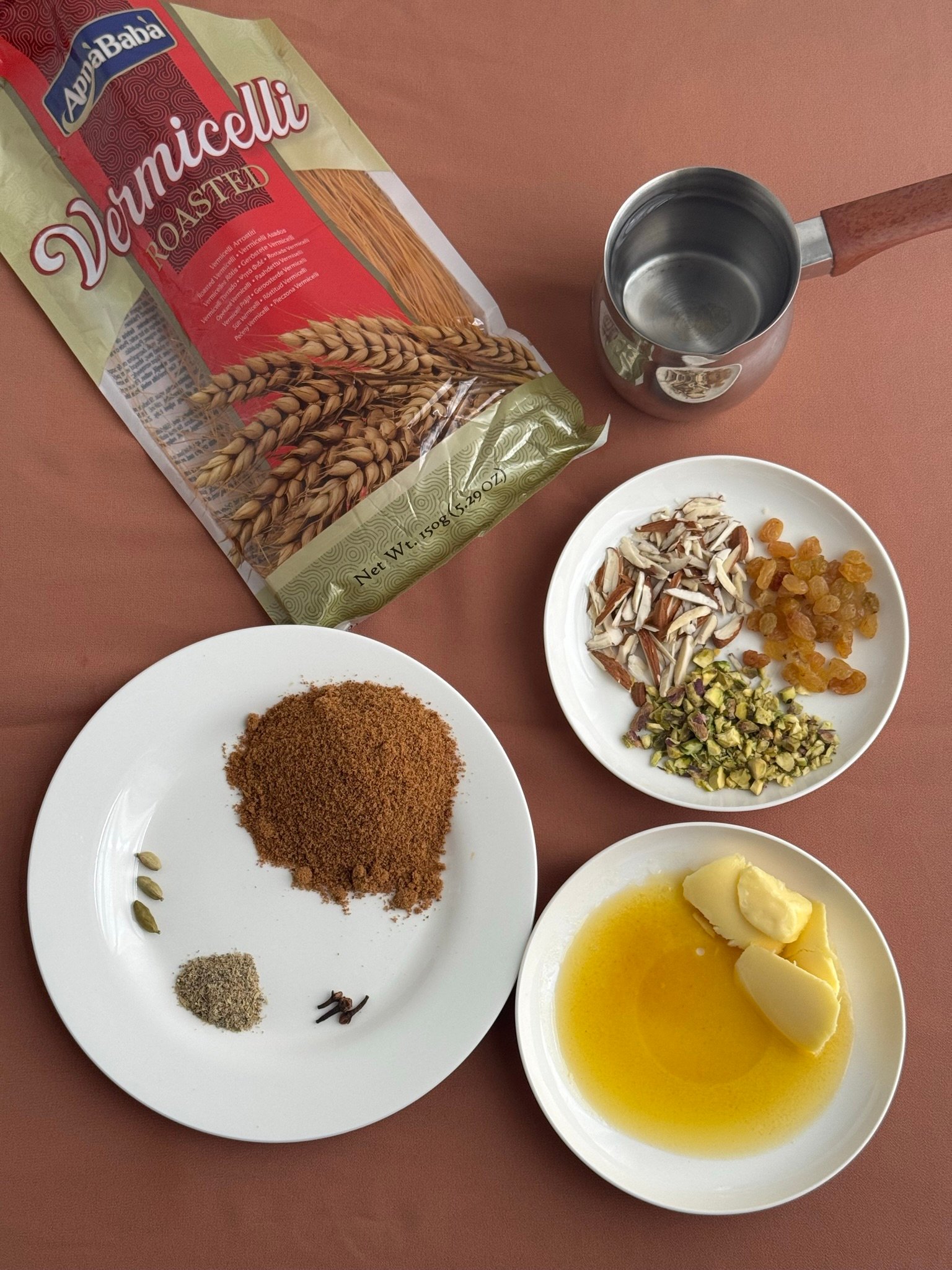
- The right vermicelli. You need South Asian seviyan — the very fine, thread-like vermicelli specifically sold for this dish. Brands like Ahmed Foods, National, and Shan all make it, usually labeled "Roasted Vermicelli." Even though it says roasted, we're going to toast it again in ghee for depth of color and aroma. Don't substitute Italian angel hair or spaghetti — the texture is completely different. If you can only find thicker vermicelli, it still works — add extra water and a few more minutes on low heat (see the recipe card notes).
- Desi ghee AND butter. This might look like overkill, but they do different jobs. Ghee is for toasting the vermicelli and blooming the nuts — it handles high heat and gives the nutty, browned-butter flavor that defines the dish. Butter goes in at the end with the sugar water to add richness and a softer, creamier finish. Skip the butter and it tastes lean. Skip the ghee and you lose the whole character. DO NOT use just oil.
- Brown sugar or white sugar. Brown sugar gives a deeper, molasses-tinged sweetness that pairs beautifully with the ghee. White granulated sugar gives a cleaner, brighter sweetness and lets the cardamom stand out more. Both are traditional. I lean brown for Eid mornings, white for lighter everyday versions.
- Whole cardamom pods AND ground cardamom. Not interchangeable. The whole pods (lightly cracked) infuse the sugar water slowly as it simmers. The ground cardamom goes in at the end with the butter for a fresh, top-note aroma. Using only one or the other flattens the flavor.
- Cloves. Three is the magic number. Enough to add warmth to the syrup, not so many that it turns medicinal. Fish them out before serving if you're worried about someone biting into one.
- Nuts — almonds, pistachios, raisins. The classic trio. Almonds for crunch, pistachios for color and a slightly grassy sweetness, raisins for chewy pockets of sweetness that plump up in the ghee. Cashews are a good addition if you like them. Slivered or finely chopped works better than whole — you want the nuts distributed through every bite, not hunted for.
- Optional: khoya. Some families add crumbled khoya (milk solids) along with the nuts for a richer, more indulgent version. It's delicious but makes the dish heavier. I usually skip it because my husband prefers it lighter, but if you're making this for Eid and want to go all-out, add a handful when you add the fried nuts.
The Techniques That Make or Break It
The recipe card tells you what to do. This section covers the judgment calls that separate perfectly fluffy seviyan from a sticky, broken, or bland version.
Toast the vermicelli to the RIGHT shade of gold
Even though the packet says "roasted," you're going to toast it again in ghee, and this second toasting is where the flavor lives. You want a warm, even golden-brown color and a strong nutty aroma — not pale, not dark.
Too pale and the dish tastes like sweet noodles instead of Eid dessert. Too dark and it turns bitter. Stir constantly on medium heat and pull the pan the moment the color turns and the smell hits you. This is a 5–6 minute window and requires your full attention.
Crush the vermicelli BEFORE toasting
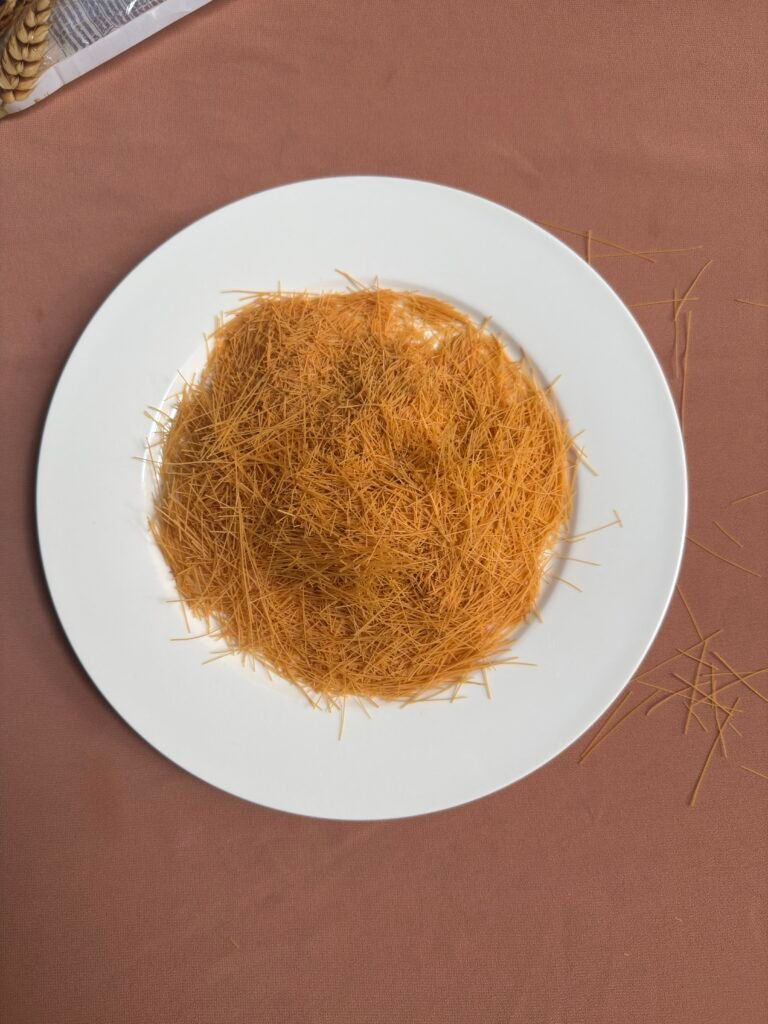
Do this inside the sealed packet — press and break the strands into roughly 1-inch pieces before opening. If you skip this step, you end up with long, awkward strands that clump together and cook unevenly. Broken strands toast more evenly and eat like a proper dessert instead of a bowl of noodles.
Fry the nuts SEPARATELY, first
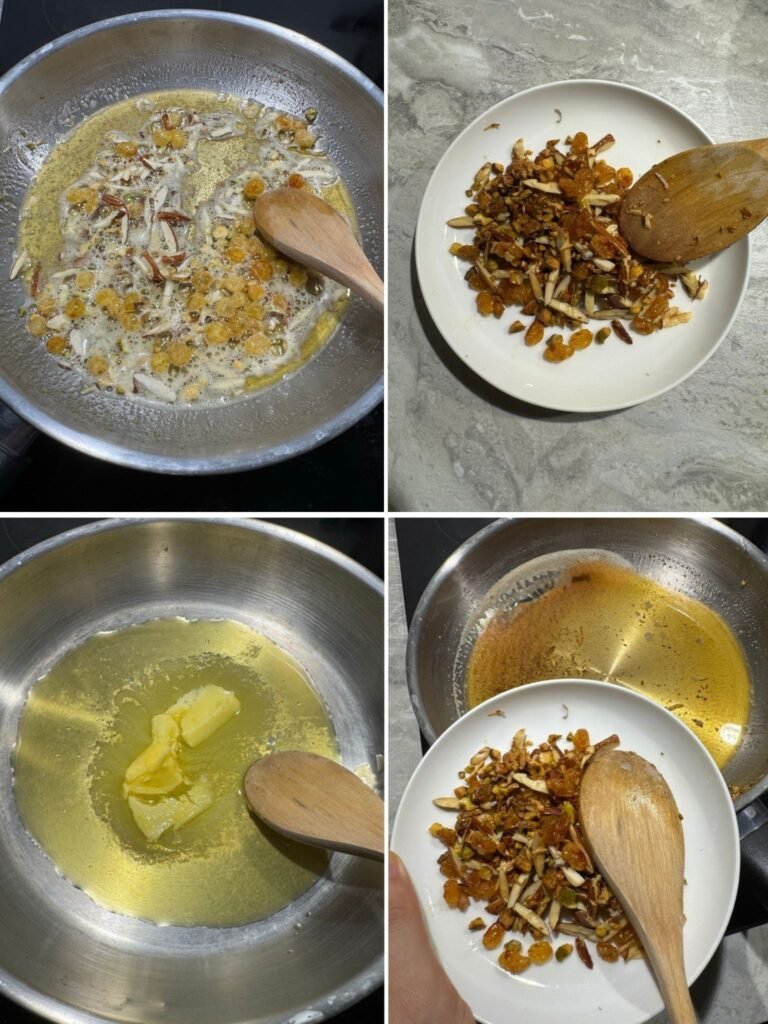
The nuts and raisins get 60 seconds in hot ghee before anything else happens. This blooms their oils, plumps the raisins, and gives everything a glossy, toasted finish. Add them at the end as garnish, NEVER cook them with the vermicelli — they'll either burn during the toast or go soft and disappear into the dish.
Watch the raisins closely. They go from dry to plump to burnt in seconds.
The sugar-water goes in HOT
Have your sugar syrup simmering and ready before you start toasting the vermicelli. When the seviyan hits the perfect golden shade, you pour the hot syrup in immediately — the sizzle is dramatic and that's the point. Cold syrup on hot vermicelli seizes the ghee and makes the texture greasy.
Cover, rest, and DO NOT stir
Once the water is absorbed, turn off the heat, cover the pan, and walk away for 5 minutes. The residual steam finishes cooking the vermicelli through and lets the strands separate. If you stir during this rest, you break the delicate strands and turn fluffy seviyan into a sticky mash.
Tips
- Make ahead. Seviyan holds beautifully for 2–3 days in the fridge. Reheat gently in the microwave with a splash of water, or in a covered pan on low heat.
- Adjust the sweetness. 180g of sugar to 150g vermicelli is on the sweeter side (Eid morning territory). For an everyday version, drop to 130–140g.
- Thicker vermicelli? Add ½ cup extra water and cook 5 more minutes on low. Cover tightly so the extra steam doesn't escape.
- Cardamom pods everywhere? Fish them out before serving if you're serving to kids or guests. Cloves too.
- DO NOT skip the rest step. This is the difference between fluffy strands and a sticky lump.
Meethi Seviyan Recipe - Sweet Vermicelli
Ingredients
For the sugar syrup
- 2 cups water
- 180 g brown sugar or white granulated sugar
- 3 green cardamom pods lightly cracked open
- 3 whole cloves
For the seviyan
- 150 g 1 packet fine South Asian vermicelli (Ahmed Foods, National, or Shan)
- 3 tbsp desi ghee
- 3 tbsp unsalted butter
- ⅓ tsp ground cardamom
For the nuts and garnish
- ¼ cup slivered or finely chopped almonds
- ⅕ cup chopped pistachios
- ⅕ cup raisins golden or black

Instructions
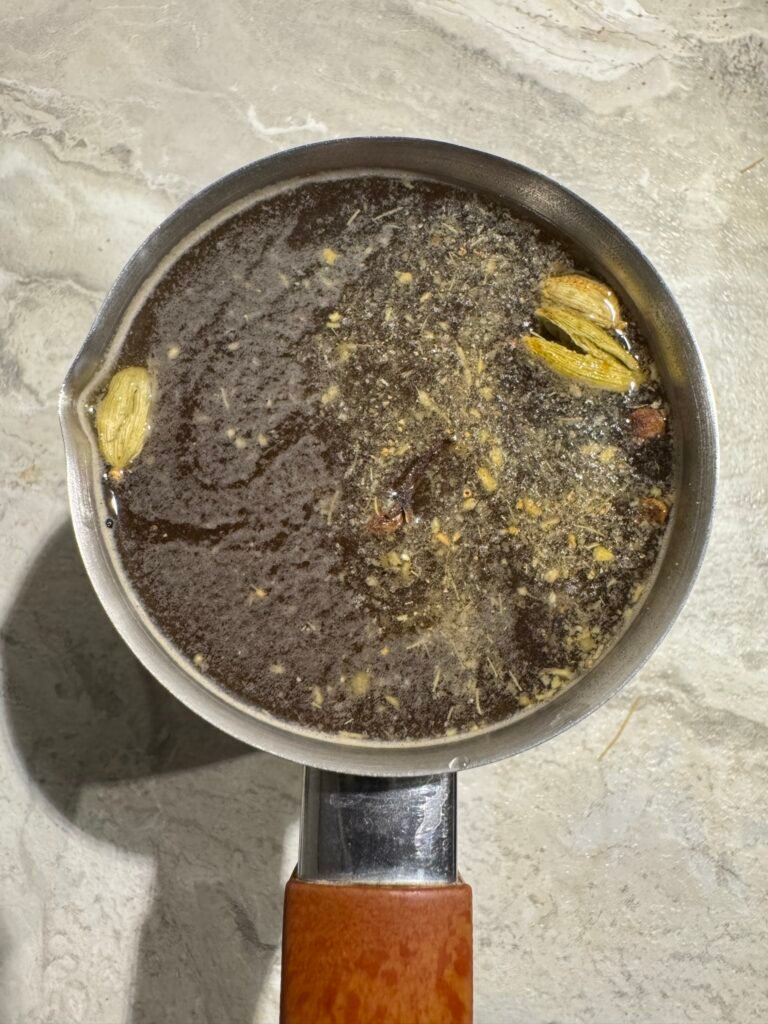
- Make the sugar syrup: In a small deep pan, combine 2 cups water, 180 g sugar, 3 cracked cardamom pods, and 3 cloves. Bring to a boil over medium heat, then reduce to low and simmer until the sugar dissolves completely. Turn off the heat and set aside — you want it hot when it goes in.
- Crush the vermicelli: Without opening the packet, press and crush the vermicelli with your hands into roughly 1-inch pieces. Then open and transfer to a plate.
- Fry the nuts: In a wide pan, heat 3 tbsp ghee over medium heat. Add the almonds, pistachios, and raisins. Fry for about 60 seconds, stirring constantly, until the nuts are lightly golden and the raisins plump up. Remove and set aside — watch closely, they burn FAST.
- Toast the vermicelli: In the same pan (with the leftover ghee), add the crushed vermicelli. Toast over medium heat for 5–6 minutes, stirring constantly, until the strands turn a warm golden-brown and smell nutty. DO NOT walk away — this is where the flavor happens.
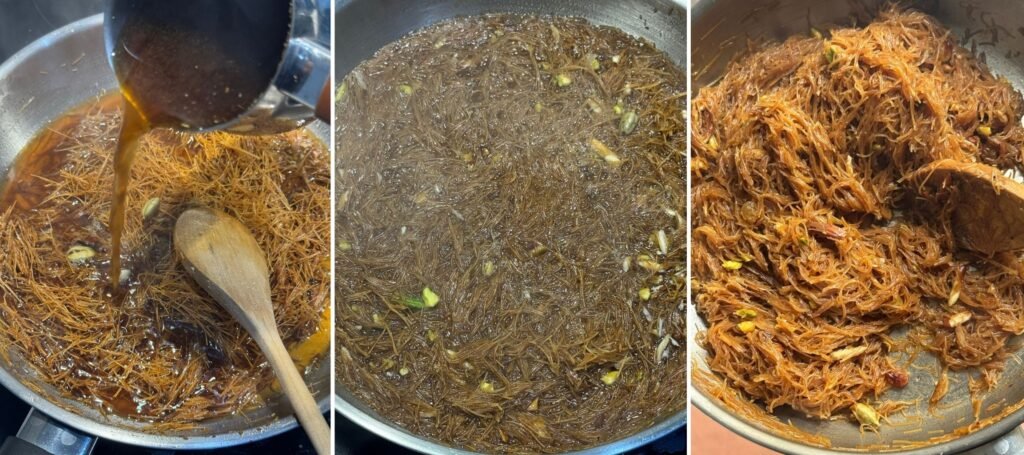
- Add the syrup and butter: Pour the hot sugar syrup into the toasted vermicelli (it will sizzle dramatically — that's what you want). Add the 3 tbsp butter and ⅓ tsp ground cardamom. Stir gently to combine.
- Simmer: Cook on medium heat for 6–7 minutes until all the water is absorbed or evaporated. Do not over-stir — you want the strands to stay whole.
- Rest, covered: Turn off the heat. Cover the pan tightly and let it rest for 5 minutes. This step is NON-NEGOTIABLE — the residual steam finishes cooking the vermicelli and separates the strands.
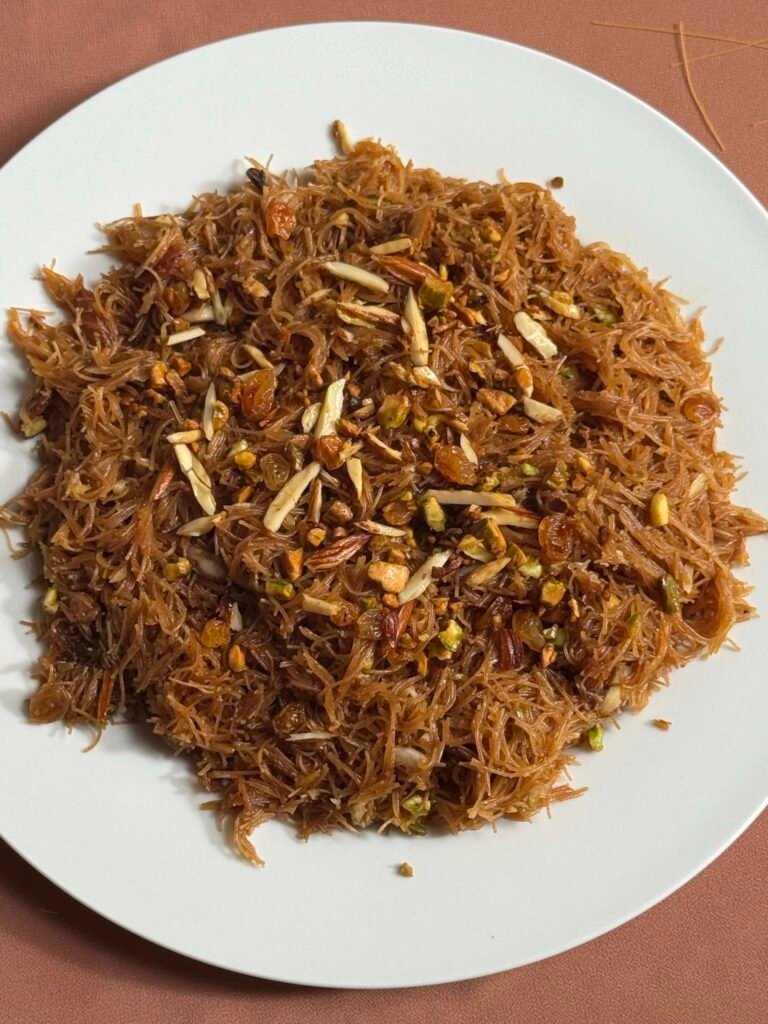
- Garnish and serve: Transfer to a serving dish and top generously with the fried almonds, pistachios, and raisins. Serve warm.
Notes
- Use the right vermicelli. Fine South Asian seviyan (labeled "Roasted Vermicelli") is what this recipe is built for. Ahmed Foods, National, and Shan all work well.
- Thicker vermicelli? Add ½ cup more water and cook for an extra 5 minutes on low heat, covered, until tender.
- For a richer version, crumble ½ cup khoya into the pan when you add the fried nuts at the end. Traditional for Eid, but makes the dish heavier.
- Storage. Keeps 2–3 days covered in the fridge. Reheat gently with a splash of water in the microwave or a covered pan on low.
- Fish out whole cardamom pods and cloves before serving if you're serving to kids or guests who might bite into one.
What to Serve with Meethi Seviyan
This is Eid breakfast food — served alongside chai, with paratha or puri if you want a fuller table, and often as part of a spread that includes savory dishes too.
Outside of Eid, it works as a light after-dinner sweet with a small cup of masala chai. A dollop of thick cream or a scoop of vanilla ice cream on the side turns it into a proper dessert course, though that's not traditional.
Frequently Asked Questions
What's the difference between sukhi seviyan and sheer khurma?
Sheer khurma is made with milk — the vermicelli is simmered in sweetened milk with dates, nuts, and cardamom until it becomes a rich pudding. Sukhi seviyan (this recipe) uses water and sugar instead of milk, so the finished dish is fluffy and dry rather than creamy. Both are traditional Eid desserts, but they're different dishes.
Can I use whole wheat or gluten-free vermicelli?
The recipe works with any fine vermicelli, but the texture and flavor won't be quite the same. Whole wheat vermicelli gives a nuttier, denser result. Gluten-free rice vermicelli tends to break more easily — handle gently and cover during the rest step.
My seviyan came out too dry / too sticky. What happened?
Too dry usually means the vermicelli was thicker than expected and needed more water — next time add ½ cup more and extend the covered cook by 5 minutes. Too sticky means you stirred during the rest step or used too little ghee at the start. Fluffy strands need fat AND stillness.
Can I skip the nuts?
You can, but they carry a lot of the texture and flavor. If nut allergies are the issue, double the raisins and add some toasted sesame seeds or pumpkin seeds. If you just don't have nuts on hand, the dish is still good — just plainer.
Can I add khoya?
Yes. Crumble in a small handful (about ½ cup) when you add the fried nuts. It makes the dish richer and more festive, but noticeably heavier. Good for Eid, maybe too much for a Tuesday.




0 Comments